

Keiser University Doctoral Research Awards Showcase
In 2026, Keiser University launched its inaugural Doctoral Research Awards Showcase, creating a new opportunity to recognize outstanding doctoral scholarship and celebrate research with the potential to make a meaningful difference in professional practice, education, policy, and communities.
The competition began with Keiser University’s 2024–2025 doctoral graduates. From a cohort of 439 graduates, 43- approximately the top 9%- were nominated for consideration by faculty or through self-nomination with dissertation-chair support. Nominees were invited to transform years of doctoral research into concise recorded presentations designed to communicate not only what they studied, but why their work mattered.
A panel of judges evaluated the presentations using established criteria that included the significance and contribution of the research, methodological rigor and study value, results and implications, visual communication, and presentation delivery. Thirty-five nominees completed the recorded-presentation stage, from which a select group of semifinalists advanced to university-wide voting.
The semifinalists’ presentations were then shared with the Keiser community and public. Faculty and staff voting and student/public voting were weighted equally, giving both academic reviewers and a broader audience a role in identifying the research that most effectively combined scholarly quality with clear and compelling communication.
Click here to view the semifinalists’ recorded research presentations.
That process ultimately identified four finalists, representing approximately the top 1% of the eligible doctoral-graduate cohort, who were invited to present live during Residency in July. The live voting resulted in final scores that were extremely close, underscoring the caliber of scholarship represented on the stage.
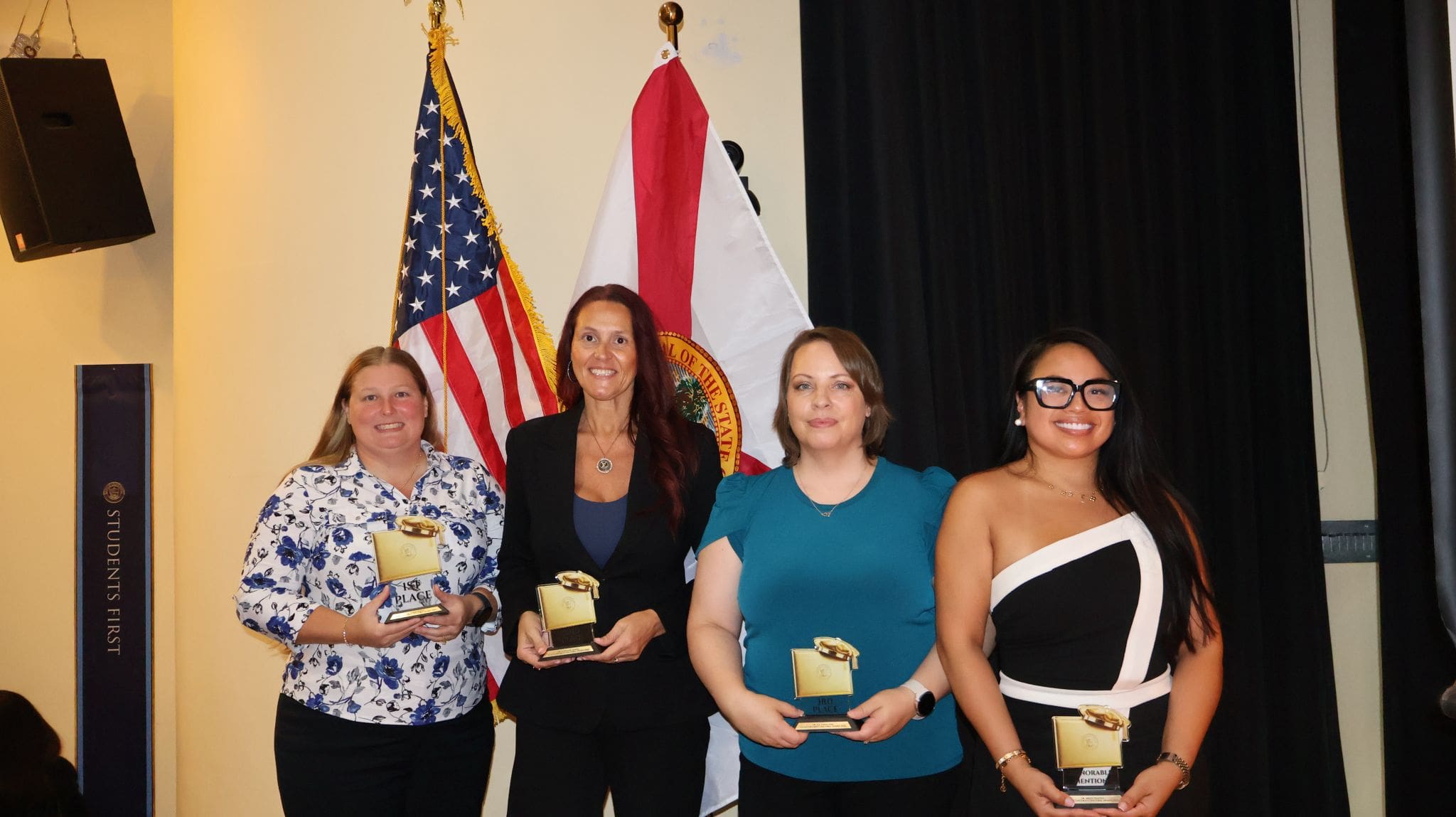
The inaugural finalists were Dr. Toshia Knous, Nursing, First Place; Dr. Stephanie L. Franks, Business, Second Place; Dr. Lee Topolewski, Criminal Justice, Third Place; and Dr. Mindy T. Nguyen, Psychology, Honorable Mention.
Although their studies addressed very different questions, the four finalists shared something fundamental: each began with a problem encountered through professional experience and used research to understand it more deeply.
Dr. Toshia Knous: Creating Better Learning Environments for Future Nurses
For first-place recipient Dr. Toshia Knous, the research question grew directly from her experience as a nurse educator.
Knous had repeatedly observed the stress and cognitive overload nursing students can experience during high-fidelity clinical simulation. She began looking for a practical way to help students process complicated clinical information without becoming overwhelmed and became interested in applying the Pomodoro Technique, an approach that incorporates structured periods of focused work and breaks, to nursing simulation.
Her original interest in improving student engagement gradually evolved as she examined the literature and recognized cognitive load as an important and measurable influence on learning. Her dissertation ultimately evaluated whether structured Pomodoro intervals during simulation could reduce students’ perceived cognitive load.
The findings were encouraging. Students reported significantly lower cognitive load during Pomodoro-structured simulations compared with traditional simulations. For Knous, the consistency of those findings reinforced a larger educational principle: learning environments should be intentionally designed to support students’ cognitive processing rather than simply increasing educational intensity.
Her research is already informing the next chapter of her career. After serving as a Nurse Coordinator and Nurse Faculty member, Knous accepted a position as Assistant Director of Nursing, where she hopes to continue advancing evidence-based nursing education and promoting implementation of her research on reducing cognitive load.
Being selected as a finalist, she said, represented more than recognition of the study itself. It reflected the perseverance and countless hours invested throughout the doctoral journey and reinforced her belief that research can create meaningful change when it addresses real educational challenges.
“Choose a research topic that genuinely matters to you because your passion will sustain you throughout the process.”
She also encourages students preparing to present their research to tell its story- why the problem matters, what they discovered, and how their findings can make a difference.
Dr. Stephanie L. Franks: Understanding the Real Cost of Choosing Graduate Education
Second-place recipient Dr. Stephanie L. Franks also found her dissertation question within her professional life.
During nearly three decades in higher education, Franks repeatedly encountered prospective graduate students who were interested in continuing their education but ultimately chose not to enroll. Their concerns were remarkably consistent: cost, time commitment, and uncertainty about return on investment.
Franks wanted to understand those decisions more closely. Her dissertation examined the effect of cost, time, and perceived return on investment on graduate enrollment decisions- not simply as institutional enrollment concerns, but as consequential decisions affecting students and their families.
One of her most important findings was the degree to which prospective students view graduate education as both a financial and an emotional investment. Students want confidence that committing their money, time, and energy to a degree will create meaningful career opportunities and justify the sacrifices involved. For institutions, Franks believes that means communicating value transparently and designing programs responsive to the needs of contemporary learners.
Franks has served for the past five years as Director of Admissions for the Graduate School at Keiser University, leading a fully remote admissions team and supporting graduate enrollment strategy across online programs. Since completing her DBA, her role as a scholar has expanded to include dissertation committees, doctoral student mentoring, national conference presentations, and strategic institutional initiatives. She describes the doctorate as strengthening her ability to bridge research and executive decision-making.
The Showcase also required a different scholarly skill: translating complex doctoral work into something a broad audience could understand.
Rather than trying to demonstrate every aspect of the research, Franks concentrated on the central message- why the research mattered, what she discovered, and how the findings could help higher education leaders and prospective students.
“The most impactful research,” she reflected, is research that people can understand and apply.
“The goal is not simply to complete a dissertation. It is to contribute knowledge that can make a meaningful difference.”
Dr. Lee Topolewski: Looking Beyond Common Assumptions in Homicide Research
Third-place recipient Dr. Lee Topolewski approached her doctoral research from the intersection of science and criminal justice.
A forensic scientist by training, Topolewski understood the scientific and evidentiary components of homicide investigations but found herself increasingly interested in understanding what drives the process surrounding violent death. As she examined the literature, she identified an area she believed deserved greater scholarly attention.
Her research required obtaining highly specific information from homicide investigators and medical examiners- a process that itself became one of the most challenging parts of the dissertation. Topolewski spent approximately three months identifying an efficient and feasible way to obtain the necessary records.
What she ultimately found challenged expectations.
In her sample, some of the anecdotal evidence and commonly accepted assumptions surrounding the phenomenon she studied were not statistically significant. Rather than producing the simple answer that might have been expected, the findings suggested a more nuanced picture.
Topolewski hopes her work will eventually influence policies for healthcare professionals and police officers, particularly regarding the recording and recognition of the significance of head and neck injuries among victims of assault.
Today, she serves as an Assistant Professor of Biology and Chair of the Department of Life & Physical Sciences. Earning her Ph.D. helped her move from an instructor role into a tenure-track faculty position.
For Topolewski, returning to her dissertation for the Showcase also had an unexpected benefit. Having graduated in 2024, revisiting the work renewed her enthusiasm for the subject and led her to identify additional research questions she may pursue in the future.
“As a researcher one can only hope to have such an impact that their study is remembered long after it’s presented.”
Her advice to new doctoral researchers is to choose a subject they truly care about, because the time and energy required by a dissertation make genuine interest more than a preference- it becomes a source of perseverance.
Dr. Mindy T. Nguyen: Bringing Social-Emotional Learning into the College Years
Honorable Mention recipient Dr. Mindy T. Nguyen built her research around a question that emerged from years of working with students at different stages of development.
As an educator and educational leader, Nguyen had repeatedly seen that academic ability alone does not determine whether students succeed. Confidence, resilience, emotional regulation, and the capacity to navigate challenges can be equally important.
That experience led her to examine social-emotional learning, or SEL, and self-efficacy among emerging adults in higher education. Her research explored whether teaching college students the foundational principles of SEL could influence their beliefs in their own abilities and their capacity to persevere through challenges.
One of the most rewarding aspects of the study was seeing how engaged college students were with social-emotional learning. SEL is often associated primarily with K–12 education, but Nguyen’s work reinforced her belief that emotional and social development continue well into emerging adulthood and that colleges can play a role in strengthening those competencies.
Nguyen currently serves as Assistant Head of School at a charter school serving grades 5 through 12, where her responsibilities include instructional leadership, student support services, special education, and dual enrollment. She also teaches psychology and STEM disciplines as an adjunct professor and is pursuing additional training in psychiatric mental health nursing.
Her doctoral journey required balancing research, educational leadership, college teaching, and raising two children as a single mother. Completing the dissertation took longer than she initially anticipated, but she credits perseverance, a clear sense of purpose, and support from her dissertation chair with helping her move forward.
Being named a finalist carried particular significance for Nguyen as a first-generation college graduate.
The recognition, she explained, represented years of sacrifice and dedication while also reaffirming her desire to continue conducting research that can positively affect students’ lives.
“Believe in yourself and take care of yourself, both mentally and physically. The journey is demanding, but the impact of your work can extend far beyond earning a degree.”
Four Disciplines, a Shared Purpose
Nursing education. Business. Criminal justice. Psychology.
The subjects that brought Knous, Franks, Topolewski, and Nguyen to the Doctoral Research Awards stage were very different. Yet their reflections reveal striking similarities.
Each chose a research problem connected to something they had seen or experienced professionally. Each described having to refine the original research idea as the study developed. Each encountered obstacles requiring patience and perseverance. And each ultimately viewed the dissertation not simply as an academic requirement, but as an opportunity to produce knowledge that could be used.
They also approached their Showcase presentations similarly. After spending years immersed in their topics, the challenge was not determining what they knew- it was determining what their audience most needed to know.
Knous wanted to tell a clear story accessible across disciplines. Franks focused on why her findings mattered and how they could be applied. Topolewski worked to make a highly specialized research topic understandable without requiring extensive background knowledge. Nguyen wanted a student, parent, educator, or colleague to be able to leave her presentation with something useful.
That ability to translate rigorous scholarship into knowledge that others can understand and use is at the heart of the Doctoral Research Awards Showcase.
The inaugural competition recognized four finalists, but it also highlighted a much larger community of doctoral scholarship across Keiser University. From the graduates nominated, to those who prepared recorded presentations, to the semifinalists selected by the judging panel, the Showcase provided a new platform for doctoral research to move beyond the dissertation manuscript and into conversation with colleagues, students, professionals, and the broader community.
For the four inaugural finalists, that journey concluded with extraordinarily close final voting- and recognition among roughly the top 1% of Keiser University’s 2024–2025 doctoral graduates.
For future doctoral graduates, it marks the beginning of a new tradition.


 After experiencing profound personal loss, Sydney Nau found her purpose in nursing. Today, she leads with compassion while advancing her education and transforming lives through patient-centered care.
