


An accelerated BSN program is a compressed nursing degree built for people who already hold a bachelor’s degree in a non-nursing field and want to enter the nursing field in less time than a traditional path requires. At Keiser University, the Accelerated Bachelor of Science in Nursing can be completed in approximately 16 months, making it a direct route to becoming a registered nurse for career changers and second degree students in Florida.
If you have been weighing your options, this guide breaks down what an accelerated BSN degree is, how it compares to other nursing pathways, who it is designed for, and what life inside the program actually looks like.
What Is an Accelerated BSN?
An accelerated BSN, or ABSN program, is a pre-licensure nursing degree designed for students who bring a non-nursing bachelor’s degree into a nursing program and complete their nursing education in a shorter time frame than a traditional BSN program allows.
Andrea Vanorio, DNP, Associate Chief Nurse Administrator at Keiser University’s Office of the Chancellor and a nursing educator with over 20 years of experience building and leading BSN programs, describes the format plainly:
“It’s designed for someone who wants to complete a nursing program in a shorter amount of time. They have to be willing to put the time in because it is compressed, a lot of information in a shorter period of time. But it gives you a great opportunity to finish your BSN in 16 months and go forward and do anything else you want to do in your career. Great starting point.” — Dr. Vanorio
Because ABSN students bring prior college coursework into the program, including general education courses and science prerequisites, the curriculum focuses almost entirely on nursing courses and core nursing concepts. The result is an accelerated bachelor pathway that demands full-time commitment but helps qualified students move toward the NCLEX-RN exam faster than many traditional programs.

Accelerated BSN vs. Traditional BSN: Key Differences in the Nursing Degree Path
Both programs lead to the same destination: a Bachelor of Science in Nursing and eligibility to sit for the NCLEX-RN licensure exam. The path looks very different.
Traditional BSN programs typically take four years and spread coursework across a broader schedule. Students in traditional nursing programs progress through three courses per semester, and clinical courses do not begin until semester four.
An ABSN program starts with six courses in the first semester, then moves to four per semester after that. Clinical placements begin far earlier, and the program runs year-round with no breaks between semesters.
At Keiser, the Traditional BSN offers a more gradual pace that suits students who benefit from a steadier schedule. The Accelerated BSN is built for students who are ready to commit fully to a compressed timeline.
Dr. Vanorio on how the traditional path differs:
“The Traditional BSN takes essentially two years when you figure in the prerequisites, so it is longer, and the courses are more spread out. They only take three courses per semester, and clinical courses do not begin until semester four, so the program is paced more gradually. Students take the same classes and prerequisites, but the curriculum is more spread out over time. And for some students, that works better.”
Quick Comparison
| Accelerated BSN | Traditional BSN | |
| Who it’s for | Students with a prior bachelor’s degree | Students starting without a degree |
| Program length | Approximately 16 months, after general education credits and prerequisites are evaluated and/or completed | Approximately 32 months / eight semesters |
| Courses per semester | 6 in the first semester, 4 thereafter | 3 |
| Clinical start | Early in the program | Semester 4 |
| Pace | Compressed, full-time, year-round | More gradual |
Accelerated Programs vs. FastTrack BSN: A Distinction Most Programs Don’t Explain
This is a nuance that many articles on accelerated nursing programs miss. At Keiser, the accelerated bachelor pathway and the FastTrack BSN are not the same program with different names. They have two separate entry points but share the same nursing coursework and the same 16-month timeline.
“The accelerated BSN and FastTrack programs follow the same curriculum, but they offer two different entry points. Accelerated BSN students must already have a degree, while FastTrack students need 60 credit hours toward one. Students from both pathways take classes together and are not separated. ” — Dr. Vanorio, DNP
The practical implication: if you hold a prior bachelor’s degree, you enter through the Accelerated Nursing degree pathway. If you have 60 or more qualifying college credits from one or more accredited colleges or universities, the FastTrack BSN may be your path.
Who Is the Ideal ABSN Student?
The ABSN program is designed for students who are genuinely ready for nursing school, not just academically, but personally. That distinction matters more than many prospective students realize.
At Keiser, applicants need to meet the following criteria:
- A bachelor’s or graduate degree in a non-nursing discipline from an accredited school, with a cumulative GPA of 3.0 on a 4.0 scale, or a 3.0 GPA in the last 60 credits of the degree
- A cumulative 3.0 GPA for general education/prerequisite courses
- Prerequisite courses completed with a grade of B or higher: Human Anatomy and Physiology I and II, General Chemistry, Microbiology with lab, plus Lifespan Development and Statistics with a grade of C or better
- A Wonderlic SLE minimum score of 23, administered on-site at a Keiser University campus
- Completion of an interview with the BSN program director and approval from the BSN Admissions Committee.
This makes the Accelerated Bachelor of Science in Nursing (ABSN) program a strong fit for non-nursing graduates who have already completed a bachelor’s degree and are ready to make nursing their next academic and professional focus. It may also suit aspiring nurses who want a structured, immersive path into professional nursing practice.
Dr. Vanorio is direct about who she steers toward a different path:
“You have to genuinely want to become a nurse. If someone is pursuing it for somebody else, they may not stay as motivated or put in the same level of effort. Some students also assume they can breeze through the program because they were previously a medical assistant or earned a biology degree. But nursing school is very different. I’ve even had students with medical school experience struggle during their first semester because nursing requires a different way of thinking and learning. ”
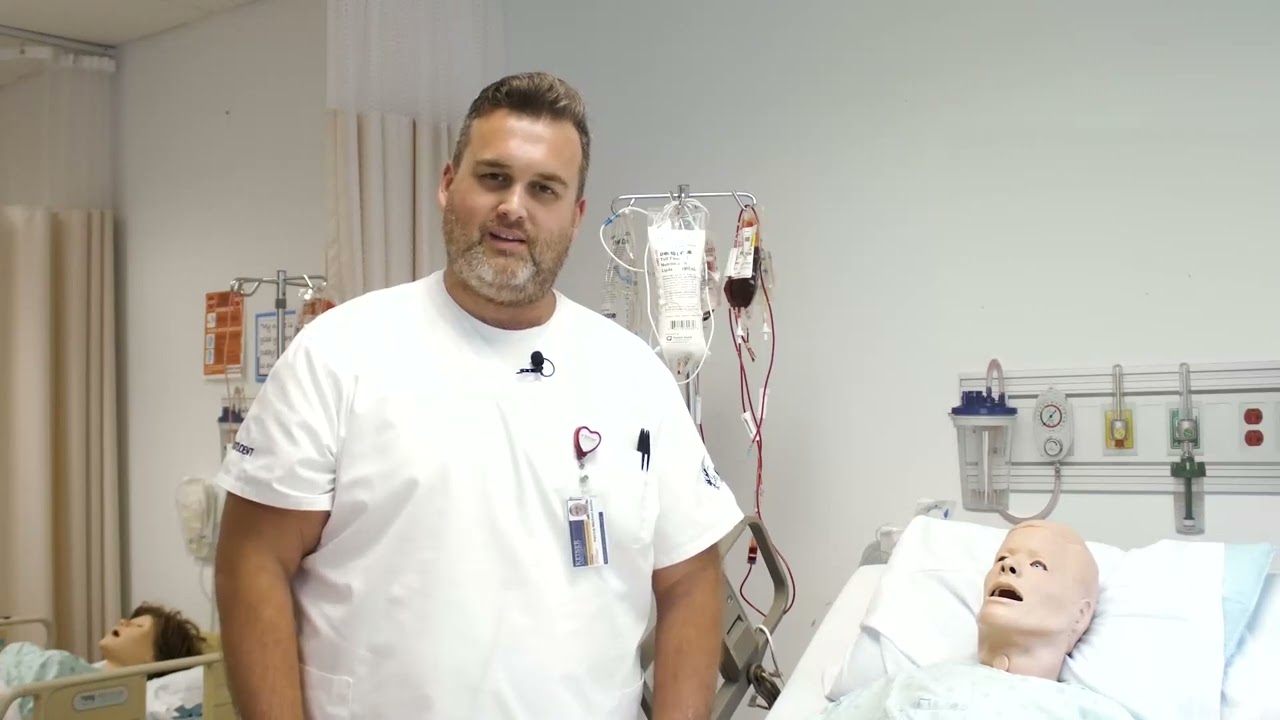
Accelerated BSN Program Student at Keiser University
Patrick Avello, enrolled in the Keiser University Accelerated BSN program, shares his journey and how he discovered his passion for nursing. “Keiser’s accelerated program fits my needs, providing top-notch resources and clinical experiences.”
Non-Nursing Bachelor’s Degree Requirements and Prerequisite Courses
Students entering an ABSN program are not starting from a high school diploma. Because they already hold a bachelor’s or graduate degree, the program can focus heavily on nursing education instead of repeating general education requirements.
That prior bachelor’s degree matters because it shows that the student has already completed college-level work. The ABSN program then builds on that foundation with nursing theory, nursing practice, clinical experiences, and direct patient care.
Prerequisite courses are also important because they help prepare nurses for the science-based and patient-focused work they will encounter in the program. Anatomy, physiology, microbiology, chemistry, lifespan development, and statistics give students basic skills they will use when studying patient care, health promotion, population health, and evidence based practice.
Students should speak with an admissions counselor to confirm how their previous coursework applies to Keiser’s requirements.
What the Day-to-Day Looks Like for an ABSN Student

Inside the nursing classroom prospective ABSN students are often told the program is “intense.” Here is what that actually means at Keiser:
Students commit Monday through Friday for the full 16 months. Didactic classes run two to four hours per session, labs run one to two hours, and clinical hours range from 130 to 225 hours per semester depending on the course.
Keiser’s program includes close to 700 total clinical hours, covering settings from long-term care facilities in the first semester, to hospitals and specialty rotations, and finishing with a supervised preceptorship in the student’s chosen area of nursing practice.
“In the last semester, it’s 225 hours. It takes a lot of hours and a lot of time. You need to dedicate five to ten hours a week to studying at least and reviewing that material, asking for help, reviewing exams, going over concepts and topics. And there are at least four exams and a final in every class, plus a standardized exam.” — Dr. Vanorio, DNP
This structure gives the nursing student repeated exposure to classroom learning, a simulation environment, hands on learning, and hands on patient care. Over time, students apply nursing theory to real clinical experiences while building critical thinking and clinical judgment.
For students who need to keep working during the program, Dr. Vanorio offers realistic guidance:
“It’s an individual thing. Some people can handle working 40 hours a week and keep a straight A average. Some people can’t. If they’re not doing well, I would suggest they might need to think about cutting back on their work hours or making some other accommodations for a short period of time.”
Why the Bachelor of Science in Nursing Matters
The BSN is not just a checkbox. It shapes where registered nurses can work and how quickly they can advance.
Many hospitals pursuing or maintaining Magnet Status, a designation recognized as a mark of nursing excellence, require a set percentage of their nursing staff to hold a BSN. Unit management positions at many facilities also require a minimum of a BSN for consideration.
Dr. Vanorio explains the long-term picture:
“To advance in the nursing profession, further education is usually required. Many ASN nurses go on to earn a BSN to support career growth. Becoming a nurse practitioner also requires a BSN and graduate-level training, such as an MSN. For that reason, the BSN often becomes an important step for long-term advancement.”
For students who complete the accelerated bachelor of science in nursing and later want to continue into advanced practice, Keiser also offers a Master of Science in Nursing, Family Nurse Practitioner program as a natural next step.
Nursing Career Outlook and Labor Statistics
According to the U.S. Bureau of Labor Statistics Occupational Outlook Handbook, 2024–2034 projections, employment of registered nurses is projected to grow 5 percent from 2024 to 2034, faster than the average for all occupations. The BLS projects approximately 189,100 openings for registered nurses each year on average over that decade, driven by an aging population, increased demand for healthcare services, and the need to replace experienced nurses who exit the workforce.
This is the professional context ABSN students are stepping into. A Bachelor of Science in Nursing prepares graduates for opportunities in hospitals, outpatient centers, community health, public health, and specialty care settings, including emergency nursing and ICU roles.
For students with long-term career goals in leadership, advanced practice, or specialized nursing care, the BSN can also serve as an academic foundation for future study.
What Sets Keiser’s ABSN Program Apart
For prospective ABSN students comparing accelerated baccalaureate programs in Florida, a few features of Keiser’s approach stand out.
Small class sizes. Keiser’s accelerated bachelor of science courses typically enroll 20 to 25 students. That ratio can support clinical instruction, faculty attention, and lab time.
Dr. Vanorio puts it plainly:
“Keiser students are not just a number, they’re a name, and people forget about that at the bigger universities. There, you’re a number, at Keiser you’re a person with a name where people know you, they respond to you, and try to help you. We want you to be successful. We truly do mean students first when we say students come first at Keiser University.”
Progressive clinical placements. Keiser’s clinical partnerships are structured to give students progressively more complex experiences. Students begin in long-term care facilities, advance through hospital settings and specialty rotations, and finish with a preceptorship where they work alongside a practicing nurse in their chosen area of the field.
NCLEX preparation woven throughout. NCLEX preparation is not a single review course tacked onto the final semester. Students take standardized exams in every content area throughout all four semesters, so the program can measure where each student stands and where additional support may be needed.
Financial Aid available. Students are encouraged to speak with an admissions counselor to review tuition, fees, and available options. Financial aid is available to students who qualify
Is an ABSN Program the Right Move for Your Nursing Journey?

Dr. Vanorio’s advice to students who are on the fence comes from decades of watching students thrive in small-class environments who might not have succeeded elsewhere:
“Not every student thrives at a large university, but that doesn’t mean they can’t be successful here. Many students who struggle in larger settings do very well in this environment because of Keiser’s smaller class sizes and more individualized support. That level of attention can make a real difference. ”
If you hold a non-nursing bachelor’s degree, meet the minimum GPA and prerequisite requirements, and are ready to make nursing your priority for the next 16 months, the accelerated track may be a practical route to a nursing career.
As Dr. Vanorio has seen over decades of program leadership, the students who thrive share one quality:
“Ultimately, it depends on how much students want to become a nurse and the effort they’re willing to invest. Many don’t just thrive, they excel advancing into roles such as nurse managers and nurse practitioners, and building careers well beyond the RN entry point. ”
Request information about Keiser University’s Accelerated BSN program to take the first step toward your nursing career.
Frequently Asked Questions
What does ABSN stand for?
ABSN stands for Accelerated Bachelor of Science in Nursing. It is a compressed nursing degree designed for students who already hold a non-nursing bachelor’s degree and want to complete their nursing education in a shorter time frame than a traditional BSN program requires.
How long does an ABSN program take?
At Keiser University, the ABSN program is designed to be completed in approximately 16 months of full-time, year-round study, after prerequisite courses are completed or transferred in. The program length allows qualified students to complete the nursing coursework in about half the time of a traditional bachelor pathway.
Do I need prior nursing or healthcare experience to apply?
No. The ABSN program is designed for students with a non-nursing bachelor’s degree. Prior healthcare experience is not required.
The key academic requirements are a strong academic record, completion of prerequisite science courses, and a minimum cumulative GPA of 3.0.
What is the difference between an ABSN and a FastTrack BSN at Keiser?
Both programs cover the same nursing coursework and finish in 16 months. The accelerated bachelor pathway requires a completed bachelor’s degree.
The FastTrack BSN is open to students with at least 60 completed credit hours toward a degree. Students in both tracks take classes together and earn the same credential.
What exam do graduates need to pass to become a registered nurse (RN)?
Graduates must pass the NCLEX-RN examination to practice as a registered nurse. Keiser’s program prepares students for the NCLEX-RN from the first semester through standardized exams, clinical case studies, clinical judgment exercises, and a dedicated NCLEX preparation component in the final semester.
Can I work while enrolled in an accelerated nursing program?
It depends on the individual. The program requires a five-day-per-week commitment between classes, labs, and clinical hours, plus five to ten hours of independent study per week.
Some students manage part-time work; others need to step back from employment during the program. An admissions counselor can help you think through your specific situation. However, prospective ABSN students are strongly advised to dedicate as much time as possible to their studies.
Is an ABSN program the same as an Associate Degree in Nursing?
No. An Associate Degree in Nursing and a Bachelor of Science in Nursing are different academic pathways. An ABSN program is designed for students who already hold a bachelor’s degree in a non-nursing field and want to complete a pre-licensure nursing program at the bachelor’s level.
About Keiser University
Since 1977, Keiser University has been preparing students for careers through career-focused education. Keiser University is accredited by the Southern Association of Colleges and Schools Commission on Colleges (SACSCOC) to award associate, bachelor’s, master’s, and doctoral degrees.
As a Keiser University student, you’ll benefit from:
- Over 100 associate, bachelor’s, master’s, and doctoral degree programs aligned with today’s workforce
- Flexible learning options, including on-campus, and online formats
- Personalized academic and career support, with dedicated faculty and career services
- Financial aid, scholarships, and tuition guidance for students who qualify
- Small class sizes and one-class-at-a-time scheduling at select campuses
Contact Keiser University today to learn how our nursing programs and career-focused approach can help you move forward. Call toll-free 888-KEISER-9, contact a Keiser campus near you, or request information about the Accelerated BSN.

Contributing Author
Andrea Vanorio, DNP, RN
Associate Chief Nurse Administrator- Keiser University, College of Nursing
Dr. Andrea Vanorio serves in multiple leadership roles within the nursing field at Keiser University. She is recognized as the Associate Chief Nurse Administrator and University Undergraduate Department Chair for the North Central Division in Lakeland, Florida. As Nursing Program Director at the Lakeland campus, she has overseen nursing education initiatives while encouraging student participation in community health efforts, including vaccine distribution programs. In addition to her academic leadership, Vanorio is also listed in the ACEN Peer Evaluator Directory, reflecting her involvement in nursing accreditation, program evaluation, and quality assurance within healthcare education.

 After experiencing profound personal loss, Sydney Nau found her purpose in nursing. Today, she leads with compassion while advancing her education and transforming lives through patient-centered care.


