
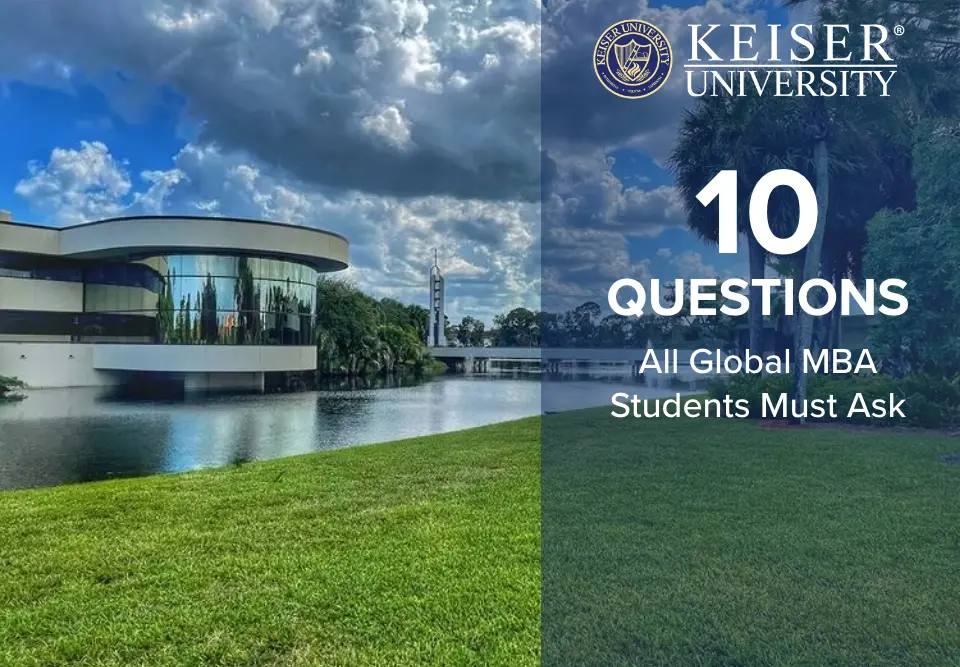
The modern business world is becoming increasingly international in focus. Most companies do business outside their country’s borders, and this international scope requires an understanding of culture, international business practices, global business law, and much more. As a result, many business professionals pursuing an MBA will opt for a global MBA instead of a traditional one. If you are considering going back to school for an MBA, and a global MBA is appealing to you, here are ten questions you might want to ask before enrolling.
What Is a Global MBA?
A Global MBA is a business administration program focused on international business strategy, cross-cultural leadership, global finance, and multinational operations. It prepares students to work in international corporations, global markets, and cross-border business environments.
Who Should Consider a Global MBA?
A Global MBA is designed for professionals who want to operate confidently across borders, cultures, and international markets.
Below are the types of students who are interested in a Global MBA:
- International students seeking U.S. business education
- Professionals working in multinational companies
- Managers targeting global leadership roles
- Entrepreneurs entering global markets
- Business professionals relocating internationally
What International Students Should Consider:
- Accreditation
- Career placement services
- CPT/OPT support (if relevant)
- Alumni international footprint
- Networking with multinational companies
Here are some benefits of pursuing a Global MBA if you fall under one of these types:
- Strong understanding of cross-border operations
- Knowledge of international finance and trade regulations
- Cultural intelligence and global negotiation skills
- Strategic decision-making across multiple markets
- Understanding of global trade laws and compliance
Careers After a Global MBA
As companies expand globally and supply chains become more interconnected, professionals with global business expertise are in strong demand.
Below are some of the most common and high-impact career paths for Global MBA graduates.
- International Business Manager
- Global Marketing Director
- International Finance Analyst
- Global Supply Chain Manager
- International Strategy Consultant
- Regional Executive or Global Operations Director
Industry Demand Across Sectors
Global MBA graduates are in demand across industries including:
- Multinational corporations
- International finance and banking
- Global technology firms
- International trade and logistics
- Healthcare systems expanding internationally
- Consulting and advisory services
Global Collaborations: Dr. Yan Luo-Beitler on Keiser University’s International Partnerships

10 Questions for Global MBA Students
1. How Is a Global MBA Different than an MBA?
First, you need to understand the difference between a Global MBA and a traditional Master of Business Administration. While similar, these two programs are not quite the same thing.
A Global MBA program is a variant of the traditional MBA. It focuses on international business management. This is highly important in the modern business world because modern companies do business with more than just their local communities. This degree offers similar training to an MBA but adds an international focus and perspective. Related topics include international marketing and finance.
2. How Do I Best Prepare for a Global MBA Program?
To apply to a global MBA program, you will need to:
- Have an updated resume with current references and some recommendation letters
- Prepare for and take the GMAT because a good score will increase your chances of getting into your program of choice
- Grow your network to help you gain more recommendations
- Decide your goals for your advanced training so you can choose the right electives or training track
3. Is This the Right Time to Enroll in a Global MBA Program?
Timing your entry into a global MBA program requires some thought. Are you in a position where you can take on the additional workload? Does your personal life give you time to study and do your coursework? Does your career provide the flexibility you need to enter a graduate program? If now is the right time, then you need to find the right program, but if it is not, give yourself permission to wait. You want to have the energy and time to dedicate to your program to ensure you get the full benefit. The right timing is going to be different for every person, so carefully consider where you are professionally and personally to decide if this is the right step for you to take.
4. What Does the Alumni Network Look Like?
One of the perks of getting an MBA of any type is the networking opportunities it affords, and some of those come from the alumni network. Does the program have a lengthy list of alumni who are successful in their fields? Does it provide a way to connect to that alumni network? Look for a program that will help you build your network by connecting you to like-minded graduates. Studying the alumni network can also give you a feel for how successful graduates might be. This can help you weigh the quality of the program. A program that has many successful graduates is obviously doing something right.
5. How Big is the Average Class Size?
Large classes give you more networking opportunities with your peers within your global MBA program, but they make it harder for students to connect with one another and with their professors. Small class sizes provide fewer networking opportunities, but the connections you make with fellow students and staff may be deeper than if your classes are large. Ask about class size and see if the program fits within your goals.
6. What Is a Typical Professor Student Relationship Like?
As you look for a global MBA program, you want one where you can build a relationship with your professors. You want to be able to learn from them, both in the classroom and outside of it, and that requires a strong professor-student relationship. These relationships can be one of your biggest assets after graduation. Professors who have global business experience can apply real world scenarios in class as well as theoretical applications.
7. Is Your Global MBA Program Accredited?
Accreditation shows that an institution meets a set level of standards for its Global MBA program. If you need financial aid, it can help you get federal and private scholarships, grants, and loans. While not all good programs are accredited, you will have more opportunities, both during school and when you graduate, if you pursue an accredited program, so ask about this.
8. How Can a Global MBA Program Help My Career?
Before investing the time and money into a Global MBA program, you want to know that it is going to benefit you directly in your career. A global MBA can help your career in a number of ways. You may benefit from:
- Increased awareness of the global business market
- Job opportunities found through your professional and alumni networks
- Improved communication skills to help you advance in other areas of your career
- Increased marketability for companies looking for advanced trained professionals
If you find yourself stuck in your position and not sure how to advance, getting an MBA with a global focus could be exactly what you need.
9. What Are the Costs Associated with a Global MBA?
Costs for any MBA program are going to vary based on the institution you choose, but this is an important question to ask. You need to know if you can afford to go back to school. However, an even more important question is what the return on your investment would be. Many business schools will offer graduate employability reports, and these can be a good source of information about the potential job opportunities available to you upon earning your global MBA.
10. Which Global MBA Program Is Right for Me?
Finally, consider which global MBA program is the best fit for your goals. If you are still working in your career field, this may mean you need flexibility, such as an online or hybrid program. If you need to grow your professional network, then the professors and the alumni network will be a vital component of this choice. If you need to get your degree quickly, a full-time, on-campus degree option may be the best fit.
Learn More About Global MBA at Keiser University
Keiser University graduate school offers a Global MBA program that does all of these. With options for on-campus, online, or hybrid degrees, our Global MBA program has something to meet the needs of most students. We have a qualified, dedicated team of professors who get to know their students well, and we have a long list of successful alumni you can join when you complete your program. Learn more about the perks of our Global MBA program, and contact an admissions counselor at Keiser University today.


 After experiencing profound personal loss, Sydney Nau found her purpose in nursing. Today, she leads with compassion while advancing her education and transforming lives through patient-centered care.


