

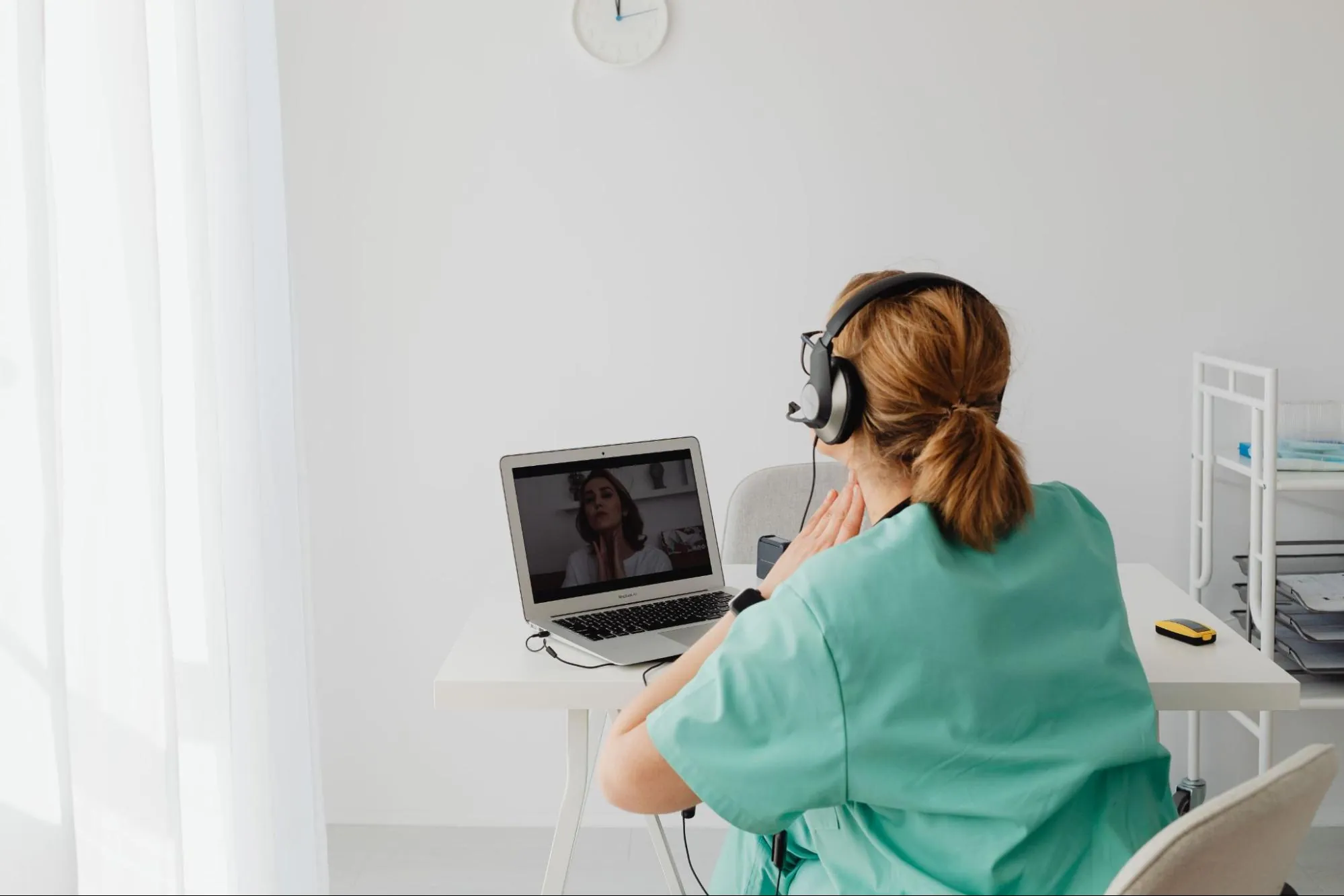
Telehealth nursing lets registered nurses monitor, educate, and coordinate care for patients from a distance, and it now shapes both entry-level nursing jobs and doctoral-level leadership roles. A Traditional BSN builds the assessment, technology, and clinical judgment skills behind every remote care role, while a Doctor of Nursing Practice prepares nurses to design and lead telehealth programs across a health system.
What You Should Know Before You Start
What does telehealth nursing involve?
- Remote patient monitoring, virtual triage, chronic disease follow-up, and patient education by phone or video.
- Virtual nursing, where an off-site nurse supports a bedside team at a hospital.
- The same assessment and clinical judgment used at the bedside, applied through a video screen.
Do I need a BSN, or can an associate degree get me there?
- A BSN, such as Keiser’s Traditional BSN, builds the foundation for telehealth nursing jobs.
- Employers increasingly favor a bachelor’s degree for remote monitoring and care coordination roles.
- Bedside experience comes first, as remote care relies on clinical judgment developed through direct patient care.
Does telehealth nursing pay differently than bedside nursing?
- Yes, but it’s not automatically lower or higher. The BLS reports a median RN salary of $93,600, while private data from Salary.com puts telehealth roles at a comparable $97,000 average.
- Pay depends on the role, employer, and experience level, with specialized or leadership-track telehealth positions often paying at or above bedside levels.
- Entry-level or lower-acuity telehealth roles can pay less than bedside jobs, partly because they often skip the shift differentials, overtime, and holiday pay built into acute-care schedules.
Is a DNP necessary for a telehealth nursing career, or optional?
- A Doctor of Nursing Practice is not required to work as a telehealth nurse or a virtual nurse.
- A DNP becomes relevant for nurses who want to design, lead, or evaluate a telehealth program rather than provide care within one.
- Keiser University’s DNP program lets students focus their electives on education, clinical practice, or healthcare administration.
Table of Contents
- What Is Telehealth Nursing? Defining a Fast-Growing Field of Nursing Care
- From the Telephone to Virtual Nursing: How Remote Care Evolved
- How a Traditional BSN Prepares Registered Nurses for Telehealth Nursing Jobs
- Telehealth Nursing Jobs and Job Outlook for BSN-Prepared Nurses
- Licensure, the Nurse Licensure Compact, and Practicing Across State Lines
- What a DNP Career Path Adds to a Nurse’s Telehealth Future
- AI, Remote Monitoring, and the Future of Patient Care
- Telehealth Nursing Salary: What Registered Nurses Can Expect
- Why Keiser University
- Frequently Asked Questions
- About Keiser University
What Is Telehealth Nursing? Defining a Fast-Growing Field of Nursing Care
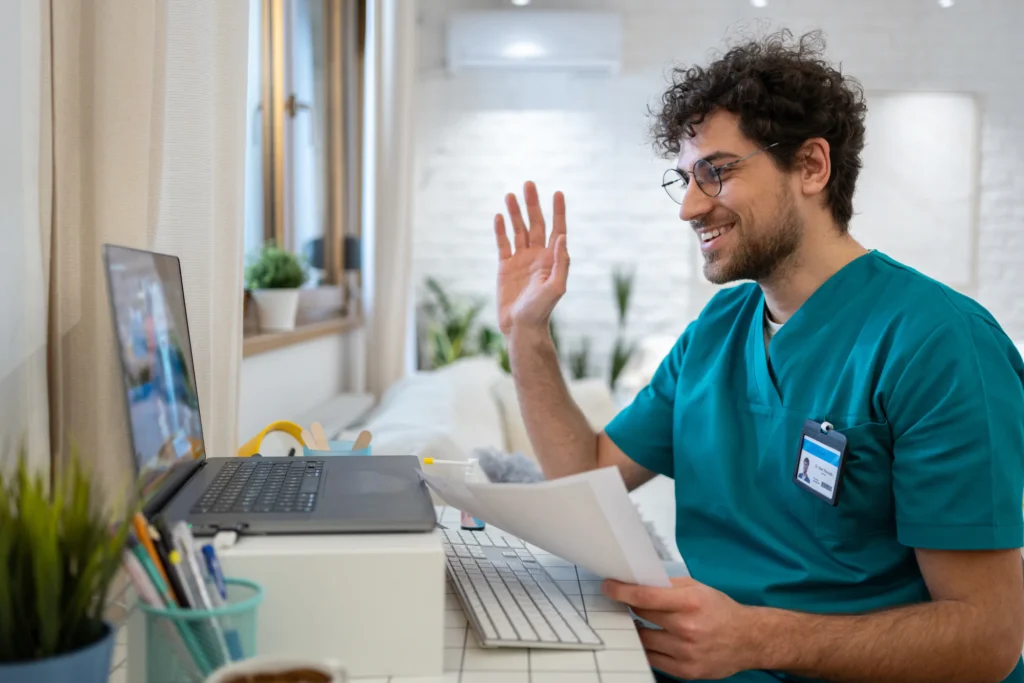
Telehealth nursing is the delivery of nursing care through phone, video, connected monitoring devices, and other telehealth technology, rather than in person at the bedside. The U.S. Department of Health and Human Services defines telehealth broadly as the use of electronic information and telecommunications technologies to support clinical care, patient education, and health administration at a distance.
Dr. Christine Mueller, DNP, Chief Nurse Administrator at Keiser University and a member of the Florida Board of Nursing, describes telehealth nursing as an expansion of where care happens, not a separate profession.
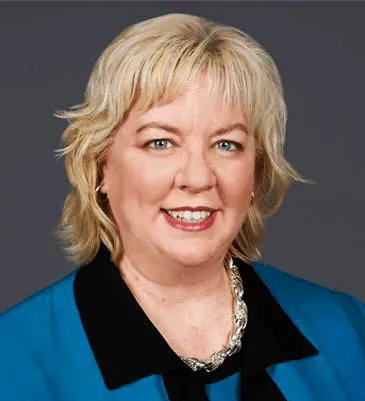
“We’re able to practice nursing in a less traditional environment now. We can actually practice nursing on the other side of a screen.”
Dr. Christine Mueller, DNP, Chief Nurse Administrator, Keiser University College of Nursing
Telehealth nursing covers several distinct types of work:
- Remote patient monitoring nurses track vital signs, lab results, and symptom trends for patients managing chronic conditions such as diabetes or high blood pressure.
- Virtual triage nurses assess symptoms over the phone or video and help patients decide whether they need emergency care, an in-person visit, or self-management at home.
- Care coordination nurses connect patients to specialists, insurance resources, and follow-up appointments, often without ever meeting those patients in person.
- Virtual nurses work off-unit in hospitals, monitoring a patient’s data and joining video calls to support a bedside nurse managing several patients at once.
Mueller explained that the virtual nursing model benefits both patients and staff because the two roles complement each other.
“They’re working with the nurse who’s on site, who can do more elaborate assessments,” Mueller said. “You can assess a patient across the screen, but there are some really key pieces missing that you can’t assess through a screen.”
A nurse cannot listen to lung sounds, feel a patient’s skin temperature, or smell an infected wound through a screen. That gap is why remote care tends to work best as a partnership between a remote nurse and an on-site nurse for hospital patients, while home-based and outpatient telehealth nursing can often stand on its own for lower-acuity needs.
If you are new to nursing, think of remote care as a delivery method layered onto skills you already understand, such as chronic disease management or patient education, rather than a separate specialty with its own license or certification.
From the Telephone to Virtual Nursing: How Remote Care Evolved
Telehealth nursing feels like a product of the past few years, but its roots reach back further than most people expect. According to Springer Publishing, telenursing has been practiced in the United States since the invention of the telephone, taking on its modern shape in the 1960s when nurses began speaking with patients by phone as a formal part of care delivery.
Remote care has moved through several distinct phases since then:
- 1960s: Nurses begin using the telephone as a formal part of patient care.
- 2020 pandemic: Video conferencing, remote monitoring, and virtual check-ins become standard practice almost overnight, and many patients never go back to scheduling in-person visits at the doctor’s office.
- Through December 2027: The US Congress continues extending Medicare telehealth flexibilities first introduced during the pandemic, according to the American Bar Association’s Health Law Section, signaling that telehealth nursing is now a permanent part of the healthcare system.
- Today: In a hospital setting, virtual nurses connect with patients remotely through video to support admissions, discharge education, medication reconciliation, and other aspects of care.
Research covered by the University of Pennsylvania’s Leonard Davis Institute of Health Economics found that virtual nursing produced modest gains in care quality for patients, though more than half of surveyed nurses said it did not reduce their overall workload. Virtual nursing and outpatient telehealth are genuine, growing parts of the profession, but neither replaces bedside care, and both still depend on strong clinical judgment to keep patients safe.
How a Traditional BSN Prepares Registered Nurses for Telehealth Nursing Jobs
A Traditional BSN is built around hands-on clinical rotations, simulation labs, and in-person care for patients. That structure might seem disconnected from a screen-based role, but the underlying skills carry directly into that work. Mueller pointed to patient assessment, communication, and clinical judgment as the three pillars that transfer from bedside training into remote care.
“The foundations of nursing don’t change. Telehealth simply changes the environment in which nurses provide care.” Mueller said.
Keiser University’s Traditional Bachelor of Science in Nursing builds those pillars across 120 credit hours and more than 20 courses. Several courses in the nursing major connect directly to the skills telehealth work requires:
- Information Technology for Nursing introduces the documentation systems, cybersecurity considerations, and communication tools nurses use in digital and remote environments.
- Physical Assessment in Healthcare develops the hands-on assessment skills nurses later apply when evaluating patients remotely through video.
- Clinical Decision Making in Evidence-Based Practice develops the clinical judgment nurses need to determine when remote care is appropriate and when a patient requires a higher level of care.
- Nursing Quality and Safety in Healthcare covers the patient safety and documentation standards that apply whether care happens at the bedside or across a screen.
Mueller noted that Information Technology for Nursing has evolved significantly since it was first developed about a decade ago, reflecting the growing role of telehealth technology in everyday nursing practice. Keiser’s BSN program outcomes reflect that shift directly, calling on graduates to use patient care technology and information systems to support clinical decision-making across a variety of health care settings.
“You need to know what data you’re getting and what data you’re not getting, to understand the difference.”
Dr. Christine Mueller, DNP, Chief Nurse Administrator, Keiser University College of Nursing
Keiser’s Mobile Nursing Simulation Lab offers another bridge into telehealth-ready judgment. The lab uses lifelike, responsive mannequins that can display symptoms such as stroke or heart attack warning signs, and sessions are recorded so students can review their own decisions afterward. Mueller confirmed Keiser has the technology to livestream simulation sessions and is exploring scenarios built for telehealth in that training, extending the same recorded, reviewable format nursing students already use to practice assessing patients in person.
Keiser University Mobile Simulation Lab
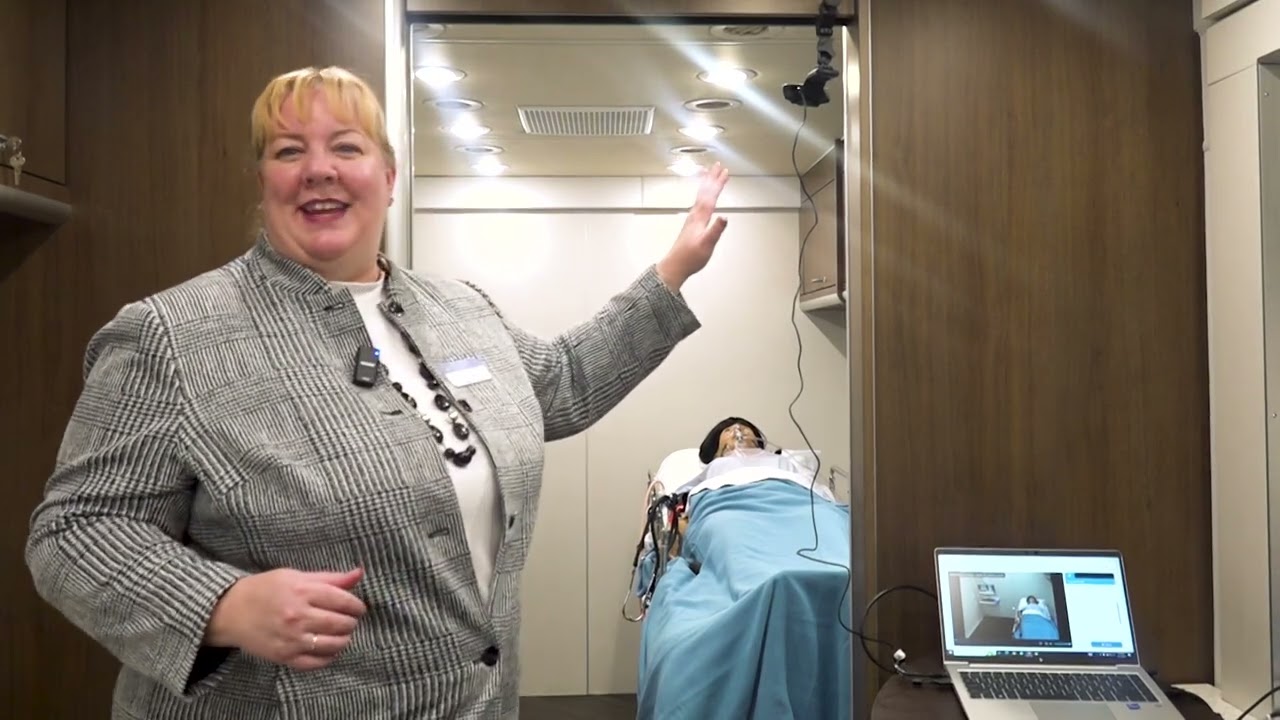
Graduates of Keiser’s Traditional BSN program qualify to sit for the NCLEX-RN and pursue RN licensure, opening the door to bedside roles across medical-surgical, emergency, pediatric, intensive care, and community health nursing along with care coordination and monitoring roles built on that experience.
Telehealth Nursing Jobs and Job Outlook for BSN-Prepared Nurses
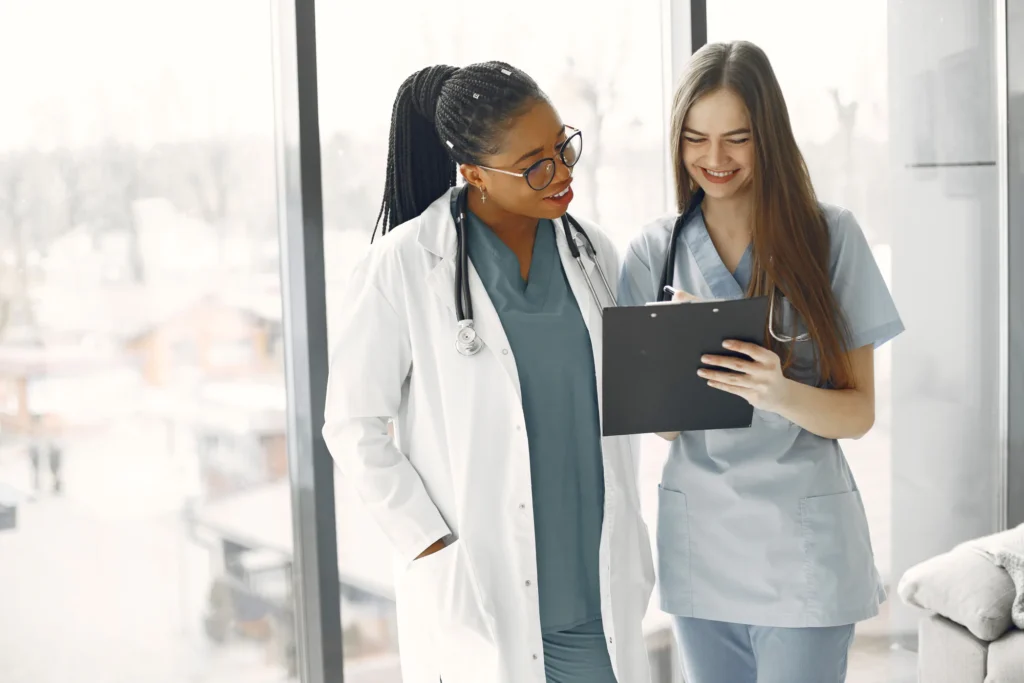
A decade ago, telehealth nursing jobs barely existed as their own category on job boards. Today, titles such as telehealth nurse, remote patient monitoring nurse, care coordinator, and chronic disease manager appear across hospitals, insurance companies, and outpatient practices.
“For BSN-prepared nurses, telehealth creates more career opportunities in virtual nursing areas such as care coordination, case management, and remote monitoring,” Mueller said. “It still doesn’t change the foundations of nursing and nursing education, so it doesn’t change what we need to prepare them for.”
Dr. Christine Mueller, DNP, Chief Nurse Administrator, Keiser University
Most nurses follow a similar path into the virtual nursing roles:
- Bedside experience, often in an intensive care unit or another high-acuity setting, where nurses learn to track several patients and interpret data quickly.
- Care coordination or case management, applying that bedside judgment to a broader patient caseload.
- Specialization in telehealth or remote monitoring, once that foundation is in place.
Telehealth nursing jobs are rarely a starting point for a brand-new nursing graduate. Employers consistently point to bedside experience as the foundation remote roles are built on.
“I don’t think there’s a safe or smart path into doing remote monitoring of something you’ve never done in person,” Mueller said.
Employers tend to name these roles for exactly what they do. Titles such as care manager, chronic disease manager, and telehealth nurse each describe a particular patient population and workflow rather than one generic remote job.
The BLS projects that RN employment will grow 5% between 2024 and 2034, with about 189,100 job openings projected each year. That growth applies broadly across hospitals and outpatient settings, including the care coordination and telehealth roles that increasingly sit alongside traditional bedside positions.
Licensure, the Nurse Licensure Compact, and Practicing Across State Lines
Telehealth nursing frequently means a nurse in one state cares for patients in another, and that reality makes licensure one of the most overlooked parts of planning this kind of career. Mueller’s seat on the Florida Board of Nursing gives her direct insight into how licensure rules apply to remote care.
“If you have a registered nurse license and you are going to care for someone in another state, you must be licensed in that state.”
Dr. Christine Mueller, DNP, Chief Nurse Administrator, Keiser University College of Nursing
A few licensure facts matter most for telehealth nursing:
- The Nurse Licensure Compact, administered by the National Council of State Boards of Nursing, lets an RN hold one multistate license issued by their primary state of residence, allowing nurses to practice in any other compact state without applying separately.
- Roughly 40 states currently participate, according to NCSBN, and the list continues to grow.
- A multistate license must be tied to a nurse’s actual primary state of residence, not a state chosen for convenience.
- Advanced practice registered nurses do not yet have access to a multistate compact license, though states are actively working on one.
- Nurse practitioners and other providers offering telehealth across state lines generally need a separate license in each state where their patients are located.
For prospective nurses, the practical takeaway is straightforward. Building a career around telehealth nursing jobs eventually means applying for a multistate license and staying current, since a nurse can only legally care for patients in states where they hold a valid license.
What a DNP Career Path Adds to a Nurse’s Telehealth Future
For a BSN-prepared nurse drawn specifically to remote care, this direction raises an obvious question: what does a doctorate add that staying at the bedside, or earning a master’s degree, does not? Mueller holds a DNP but is not an advanced practice registered nurse. Her focus is systems-level rather than clinical.
“I think as more technology is placed within the healthcare field, particularly in nursing, nursing needs to be in the driving seat for how it is implemented.” Dr. Christine Mueller
A DNP is not automatically tied to becoming a nurse practitioner. Some DNP-prepared nurses build a clinical specialty, while others, like Mueller, focus on organizational management and how new models of care, such as telehealth, get designed and rolled out across a health system.
Keiser University’s Doctor of Nursing Practice is an online program that students can typically complete in 18 to 24 months. Coursework directly relevant to leading a telehealth program includes:
- Information Management in Evidence-Based Practice, covering how health systems collect, evaluate, and apply data.
- Organizational Management, Quality, and Safety, the systems-level thinking needed to design and evaluate a program within a larger organization.
- Economics and Business Planning for Advanced Practice, the financial planning behind standing up new models of care delivery.
Keiser’s DNP program goals call on graduates to lead interdisciplinary collaboration that improves health outcomes for patients, populations, and health systems. That focus aligns with national standards that emphasize collaboration as a key component of advanced nursing practice.
The American Association of Colleges of Nursing, which sets curriculum guidelines used across nursing education, requires every DNP program in the country to build information systems and patient care technology into graduates’ training as one of its core competencies.
DNP Graduates can pursue roles such as:
- Director of nursing
- Lead nurse educator
- Clinical director or nurse manager
- Healthcare administration executive
- Public health program director
- Patient safety officer
AI, Remote Monitoring, and the Future of Patient Care

Remote patient monitoring devices and AI-assisted alerting tools are becoming a standard part of virtual care. Does artificial intelligence make a nurse’s job easier, or does it demand a more advanced kind of clinical judgment? Mueller’s answer is both.
“AI, at the end of the day, does not have judgment. You always need judgment overseeing any form of AI.”
Dr. Christine Mueller, DNP, Chief Nurse Administrator, Keiser University College of Nursing
Mueller offered a concrete example: a monitor may flag an abnormal heart rhythm in a patient, but a nurse who checks on that patient in person might find them awake, alert, and stable, with the alert traced back to a loose monitoring lead rather than a real cardiac event. Telehealth nurses need to treat monitoring data the way any nurse treats a clinical finding: by correlating it with what they can observe in the patient rather than automatically accepting it.
That responsibility extends into a few areas nursing students sometimes overlook:
- Cybersecurity and documentation: many hospitals now use text-based communication tools that count as part of the official patient record.
- Screen-based communication: confirming a patient understands a diagnosis or care plan without being physically in the same room.
- Judgment calls: knowing when virtual care is not enough for a patient’s needs.
Used well, this kind of technology can support better patient outcomes without taking the nurse’s judgment out of the loop.
Telehealth Nursing Salary: What Registered Nurses Can Expect
Telehealth nursing salary data comes with an important caveat. The BLS tracks wages for RNs and nurse practitioners as broad occupational categories, but it does not track telehealth nursing as its own occupation. Telehealth salary figures come from private compensation platforms instead, and they vary by job title and platform.
The most reliable anchor point remains the BLS-reported median annual wage of $93,600 for RNs as of May 2024. Nurse practitioners, nurse anesthetists, and nurse midwives report a higher median annual wage of $132,050, reflecting their additional graduate education and clinical scope.
Checklist: Factors That Affect Telehealth Nursing Salary
- Years of bedside experience before moving into a remote role.
- Specialty background, especially ICU, emergency, or another high-acuity setting.
- Type of employer, including hospitals, insurance companies, and outpatient care platforms.
- Additional credentials, such as the Ambulatory Care Nursing Certification.
- Whether the role sits at the BSN, MSN, or DNP level of practice.
Nurses interested in ambulatory care and telehealth-adjacent roles often pursue the Ambulatory Care Nursing Certification through the American Nurses Credentialing Center, which requires two years of RN experience and at least 2,000 hours of hands-on ambulatory or telehealth practice. No certification is required to work in telehealth nursing, but credentials like this one can strengthen a nurse’s case with employers and other healthcare providers when applying for higher-paying, specialized remote roles.
Why Keiser University
Keiser University’s nursing programs are built to meet students wherever they are in their career journey, from the Associate Degree in Nursing through the Doctor of Nursing Practice. Every level weaves in the technology, assessment, and clinical judgment skills telehealth and virtual nursing roles depend on. As Mueller put it when reflecting on where the field is headed:
“Technology is about supporting nursing judgment, not replacing it.” Dr. Mueller
At the undergraduate level, several formats let students choose the path that fits their background:
Keiser’s graduate and doctoral programs extend that foundation for nurses pursuing advanced practice, leadership, or education roles.
Keiser is a private, nonprofit university accredited by SACSCOC and ranked among the nation’s top 50 universities for Social Mobility by U.S. News & World Report for six consecutive years, including a No. 1 ranking in 2023. On-campus, online, and hybrid formats serve working adults, first-time college students, and military-affiliated students across Florida and beyond. Financial aid and scholarship options are available to help make education more accessible.
Ready to explore a career in telehealth nursing?
Whether you’re ready to apply or just exploring your options, Keiser University can help.
Request information, apply today, or visit the Nursing Programs page to discover the nursing path that’s right for you.
Frequently Asked Questions
What is telehealth nursing, and how do nurses care for patients remotely?
Telehealth nursing is care delivered through phone, video conferencing, connected monitoring devices, and other technology rather than an in-person visit. Telehealth services are used well beyond hospitals and clinics, including in correctional facilities, schools, and other government agencies, and often rely on phone triage and remote communication as much as video calls. Nurses and other providers use these tools to monitor patients, answer questions, and connect people to the right level of care.
What nursing program options lead to telehealth nursing jobs?
Most telehealth nursing jobs start with a nursing program that leads to RN licensure, whether that is an associate degree, a Traditional BSN, or another bachelor’s-level nursing degree. Graduates must pass the NCLEX-RN exam to obtain an active nursing license before they can practice, and many gain job experience as a bedside nurse before moving into a remote role. Employers increasingly prefer bachelor’s-level graduates for telehealth and care coordination positions.
What is ambulatory care nursing, and how does it improve access to care?
Ambulatory care nursing covers outpatient clinics, telehealth platforms, and other ambulatory care settings where patients are not admitted overnight. Nurses who provide telehealth services in these settings can improve healthcare access for people in rural or underserved areas, increase access to routine and follow-up care, and reduce wait times, which helps keep patient throughput moving. Telehealth can also free up physical office space and clinical resources, and nurses in these roles often support treatment planning and treatment options alongside a provider.
What is the average telehealth nursing salary?
As of August 2026, Salary.com reports $97,000 as the average salary for a Telehealth Nurse and the BLS Occupational Outlook Handbook reports a median annual salary of $93,600 for registered nurses. Base salary varies by employer, location, and experience, but many benefits come with these roles beyond pay, including more predictable hours than a full-time bedside assignment.
Where can new nurses gain experience before moving into telehealth nursing?
Most telehealth and remote monitoring roles want nurses who already have bedside experience, often in critical care, respiratory care, or another high-acuity unit, before they take on a virtual caseload. Many nurses build that foundation handling patient transfers, admissions, and other responsibilities, then move into roles where they monitor patient data from remote devices like blood pressure monitors for far more patients at once than they would see in person. Other nurses move into care coordination first, easing some of the administrative burden of a full bedside assignment.
Can I practice telehealth nursing in another state?
Yes, but only if you hold the appropriate license for that state. The Nurse Licensure Compact allows nurses who live in a participating state to hold one multistate license and practice in any other compact state, allowing nurses to build a flexible schedule and a remote work environment across state lines. Roughly 40 states currently participate, and advanced practice registered nurses do not yet have access to a widely adopted multistate compact license.
Should I ask my nursing program’s Dean or associate Dean about telehealth training?
A program’s dean, along with faculty advisors can guide students toward training programs, simulation practice, and ongoing education that build telehealth best practices into a nursing degree before graduation. These conversations often cover patient communication over video, documentation standards, and how nurses maintain accurate electronic health records while following privacy laws. All of which apply whether you are a bedside, virtual, or telehealth nurse.
What is the difference between telehealth nursing and virtual nursing?
- Telehealth Nursing is a practice method covering outpatient visits. Telehealth nurses care for patients who are outside a healthcare facility (at home, work, or in rural areas). The nurse provides remote triage, phone consultations, chronic disease management, and patient education using phone calls, video chats, or remote monitoring equipment.
- Virtual Nursing refers to a model where a nurse cares for patients who are inside the healthcare facility; the virtual nurse assists bedside staff and supports an inside team by handling documentation, admission and discharge paperwork, and second-eye monitoring via two-way audio/video cameras in the hospital room.
Both practice methods can reduce indirect expenses such as transportation by providing care through video, phone, and messaging, which is the flexibility that defines telehealth nursing today.
About Keiser University
As Keiser University prepares to celebrate 50 years of empowering students through career-focused education, it continues a legacy of academic excellence and student success while helping shape the future of higher education. Since opening its doors in 1977, the university has remained committed to preparing graduates with the knowledge, skills, and hands-on experience needed to succeed in today’s workforce. Keiser University has grown into one of Florida’s largest private, not-for-profit universities, serving approximately 20,000 students and a network of more than 100,000 alumni.
As a Keiser University student, you’ll benefit from:
- An institutionally SACSCOC-accredited university.
- Over 100 programs to choose from. Keiser’s degree programs are aligned with today’s workforce to provide the real-world experience employers look for.
- Flexible learning options, including on-campus, online, hybrid, and one-class-at-a-time formats.
- Personalized academic and career support, with dedicated faculty and career services.
- Financial aid, scholarships, and tuition guidance to help make education more accessible.
- Proud membership in the Hispanic Association of Colleges and Universities (HACU).
- Almost 50 years of educational excellence with a proven focus on student success and outcomes.
Contributing Author
Dr. Christine Mueller, DNP, RN, PCCN, currently serves as the Chief Nurse Administrator at Keiser University and the Vice-Chair of the Florida Board of Nursing. Reappointed to the board by Governor Ron DeSantis in December 2025, she is also a U.S. Army veteran and holds a Doctorate in Nursing Practice from Keiser University. Dr. Mueller has previously served as a speaker and panelist for regional nursing events, including the Nursing Consortium conference and the Health Care Horizons panel. LinkedIn | Nursing Consortium


 After experiencing profound personal loss, Sydney Nau found her purpose in nursing. Today, she leads with compassion while advancing her education and transforming lives through patient-centered care.


