
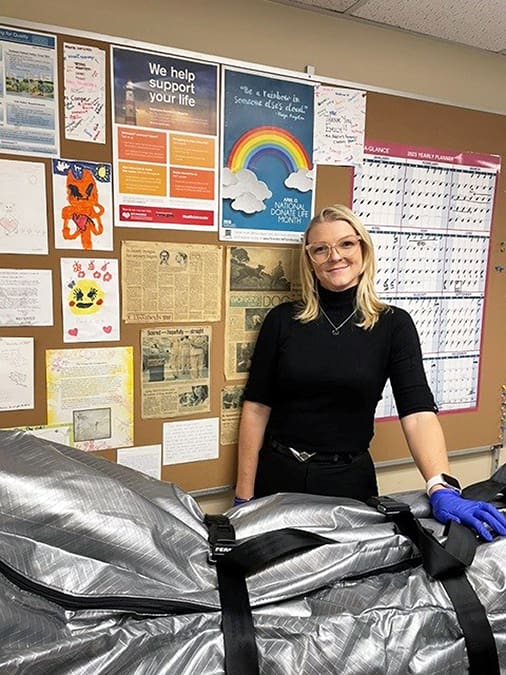
From studying forensic investigations at Keiser University to leading Mortuary & Autopsy Services at Sarasota Memorial Hospital, Emily Emilov has built a career focused on understanding death while helping the living.
Emily Emilov knew early in life that she wanted a career centered on helping others.
Growing up in a small town in West Virginia, she began thinking about that purpose as early as sixth grade. She wanted to work in a field where she could help people in pain, speak for those who could no longer speak for themselves, and contribute to justice.
When she discovered forensic investigations, she found a field that brought those interests together.
She eventually moved to Florida and, after taking a year away from college, returned to her education at Keiser University Sarasota, where she earned an Associate of Science in Crime Scene Technology and a Bachelor of Science in Forensic Investigations.
Her education eventually led her to a career she once questioned whether she could handle.
An education built around her goals
Emilov chose Keiser in part because of its accelerated format and one-class-at-a-time structure. She was working three jobs while attending school and needed an academic schedule that could accommodate her responsibilities.
But the program offered more than flexibility.
“Every day I went to class it was the expectation of going to work,” Emilov said. “We had a uniform, we had accountability, we had expectations.”
Her instructors brought professional experience into the classroom and connected students with opportunities in the local community.
“They became family,” she said. “I am still in contact with them to this day.”
The combination of classroom instruction, hands-on learning, and professional expectations helped prepare her for the workplace.
“Keiser also held a high standard of character, integrity, and professionalism,” she said. “My experience at Keiser was everything I needed to jump-start me in the field.”
While completing her degree, Emilov began exploring different areas of forensic investigations. Death investigation stood out because it combined several areas that interested her, including evidence collection, anatomy, biology, and working with families.
But there was one part of the field she wasn’t sure she could handle: autopsies.
The job she never planned to take
As part of her program, Emilov attended an autopsy and completed examinations related to the postmortem process. The experience was difficult enough that she did not pass the test the first time.
“I swore that this type of work was not for me,” she said.
She planned to pursue a career as a death investigator instead.
Two weeks before graduation, however, she began looking for opportunities that would help her enter the field. One of the only positions available was an autopsy technician job at a hospital she had already decided she would never work for.
But she applied.
After seeking guidance from her pastor and spending time in prayer, she received a call from the mortuary supervisor offering her the position.
She decided to accept, and that decision changed the direction of her career.
Emilov began working at Sarasota Memorial before graduating, spent five years as an autopsy technician, and was later promoted to supervisor. She is now completing her 10th year with the organization.
“The position was everything I wanted in a day-to-day career,” she said.
What is it like to work in Mortuary Services?
As Supervisor of Mortuary & Autopsy Services at Sarasota Memorial Hospital, Emilov and her team care for every decedent within the Sarasota Memorial Health Care System.
Their responsibilities range from coordinating with families and medical examiners to working with donation services, completing postmortem procedures, and arranging the transfer of remains.
The work also includes cases involving individuals whose remains are not claimed. In those situations, the department works with Sarasota County to ensure the person receives a respectful final disposition.
For Emilov, communication with families is an important part of the job.
“We first work with the family to ensure that their questions, concerns, and understanding of next steps are complete,” she said.
Her experience has also changed the way she thinks about the public’s perception of forensic work.
Television and popular culture, she said, can create unrealistic expectations about death investigations—the phenomenon often referred to as the “CSI effect.”
The reality is very different.
“The truth is… it’s messy, dangerous, intense, gruesome, and vulgar,” Emilov said. “Death is ugly and revolting, but the victims, the people, the patients… they aren’t.”
For Emilov, the person must remain at the center of the work.
“They are stories that were never told, wisdom that was never shared, talent and potential not actualized. Love not manifested.”
What death has taught her about life
Working around death has changed the way Emilov views life.
“I have always held a belief that life itself is valuable and precious, but working in the field has extended my understanding of that even more,” she said.
The work has taught her to be more intentional about her relationships and interactions with others.
“Every interaction I have, every conversation held, and every word I speak has purpose and meaning,” she said.
That perspective has become particularly important as she has faced difficult experiences both professionally and personally.
She began her career as the youngest person in her workplace and the only woman. Her mentor later died and became one of the cases handled by the department. She also completed her master’s degree while raising two children and experienced a miscarriage that eventually came through her department.
Those experiences changed her understanding of grief.
“Grieving isn’t weakness,” she said. “It is strength.”
Rather than ignoring difficult emotions, Emilov learned to acknowledge them and work through them.
“I no longer run from these things,” she said. “I do my best to address them head-to-head, to stick in it, examine it, acknowledge it, and release it.”
Her faith, family, exercise, time outdoors and involvement in her community have also helped her manage the emotional demands of her work.
The cases that stayed with her
Some cases have remained with Emilov throughout her career.
One occurred during her second year of work, shortly after she had given birth to her first child. The patient was a three-month-old baby girl, the same age and similar in appearance to her own daughter.
The experience was difficult.
“I cried the whole exam,” she said.
Another case involved an 18-month-old child who drowned in a private swimming pool. The parents asked permission to come and pray for their child.
The cases reinforced a lesson Emilov carries into her work: circumstances surrounding death are not always simple, and answers are not always easy to find.
“We like to live in a world of black and white,” she said. “Unfortunately, it isn’t.”
Those experiences also shaped the way she approaches people.
“All individuals have value,” she said.
From death investigation to prevention
Emilov’s career has given her a new goal. She plans to pursue a doctorate in public health and use her experience to develop a nonprofit focused on prevention and helping people live longer, healthier lives.
Her goal is to take what she has learned from working with the dead and apply it to helping the living.
“Use the dead to aid the living,” she said.
She wants to educate communities, address preventable causes of death, and help people live with greater purpose.
“Just because we deal with death doesn’t mean we have to live in it,” Emilov said. “I want to turn the darkness and bad into good and light.”
That idea connects the different stages of her career—from the young student who wanted to help people, to the Keiser University graduate who entered forensic investigations, to the supervisor now leading mortuary and autopsy services.
Her advice to those considering a career in the field reflects that same sense of purpose.
“You do not choose the field; it chooses you,” she said. “Your heart posture is what matters most.”
Keiser University is a private, independent, non-profit university serving nearly 20,000 students at 21 Florida campuses, online, and two international sites. Founded in 1977 by Chancellor Arthur Keiser, Ph.D., and Evelyn Keiser, Keiser University offers more than 100 degree programs from the associate to doctoral level. The University is a designated Hispanic-Serving Institution and was ranked No. 1 in the nation for Social Mobility by U.S. News & World Report in 2023.
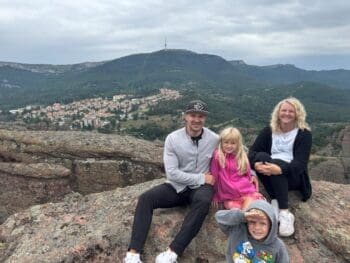
Emily Emilov with her husband and two children, who have supported her throughout her education and career.
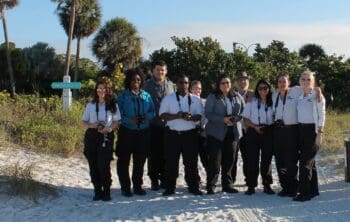
Emily Emilov and her Keiser University classmates participate in a class activity at the beach.

 After experiencing profound personal loss, Sydney Nau found her purpose in nursing. Today, she leads with compassion while advancing her education and transforming lives through patient-centered care.


