

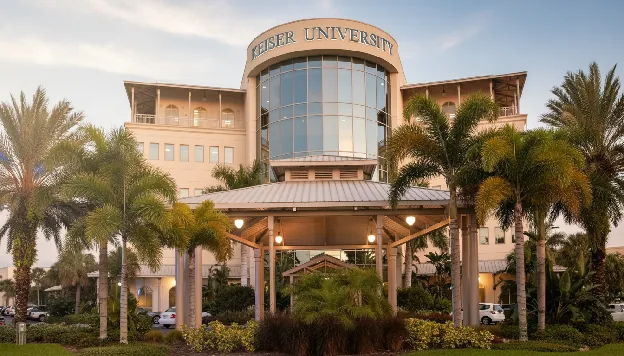
Keiser University is approaching 50 years of career-focused education with multiple campuses in Florida, online education, and international locations. One classroom with one student has grown into one of the largest private, not-for-profit universities in Florida. What follows traces how a family-founded school became a workforce partner for Florida.
Keiser University opened in 1977 as a two-room storefront school in Fort Lauderdale, Florida. Dr. Arthur Keiser founded it with his mother, Evelyn Keiser. Nearly 50 years later, the university serves approximately 20,000 students and counts more than 100,000 alumni. The founding purpose has not changed. Keiser University continues to prepare graduates for the careers employers need to fill—whether they study on campus, online, or at an international location.
What You Should Know Before You Start
Does Keiser University operate as a not-for-profit university?
- Keiser University operates as a private, not-for-profit university.
- Resources are reinvested directly into student success. That investment covers smaller class sizes, more faculty support, and programs designed around workforce outcomes rather than shareholder returns.
Who accredits Keiser University?
- The Southern Association of Colleges and Schools Commission on Colleges (SACSCOC).
- Several programs hold programmatic accreditation. Learn more about Keiser’s accreditation.
Where are Keiser University campuses located?
- Campuses throughout Florida, plus international campuses and international learning centers.
- Online division offering online degree programs with over 25 years of experience in online education.
How many programs does the university offer?
- More than 100 degree programs across associate, bachelor’s, master’s, specialist, and doctoral levels.
- Many programs serve high-demand workforce fields including health care, nursing, business, technology, and criminal justice.
Table of Contents
- How Keiser University Began in a Fort Lauderdale Storefront
- The Mother and Son Who Founded Keiser University
- From The Keiser School to Keiser University
- What a Student-First Philosophy Looks Like in Practice
- How Employer Partnerships Shape What Students Study
- Keiser University’s Contribution to Florida’s Workforce
- Recognition for Student Success and Social Mobility
- Why Keiser University
- Frequently Asked Questions

How Keiser University Began in a Fort Lauderdale Storefront
In 1977, Florida’s business and health care employers needed trained workers faster than the state could supply them. Dr. Arthur Keiser and his mother, Evelyn Keiser, opened The Keiser School in Fort Lauderdale to answer that need.
They started small, their first location occupying a two-room storefront. Chancellor Arthur Keiser has since described a small Fort Lauderdale classroom with one student. That modest beginning gave little indication of the growth that would follow.
That founding decision set a pattern the university still follows today:
- Build programs around the jobs employers need to fill.
- Teach practical skills alongside academic theory.
- Design schedules to help working adults balance education, work, and life.
- Small classes allow instructors to know and support each student.
The institution evolved through three name changes as it grew, but its founding mission remained constant: preparing students for the workforce. Each expansion responded to emerging workforce needs across Florida.
The Mother and Son Who Founded Keiser University
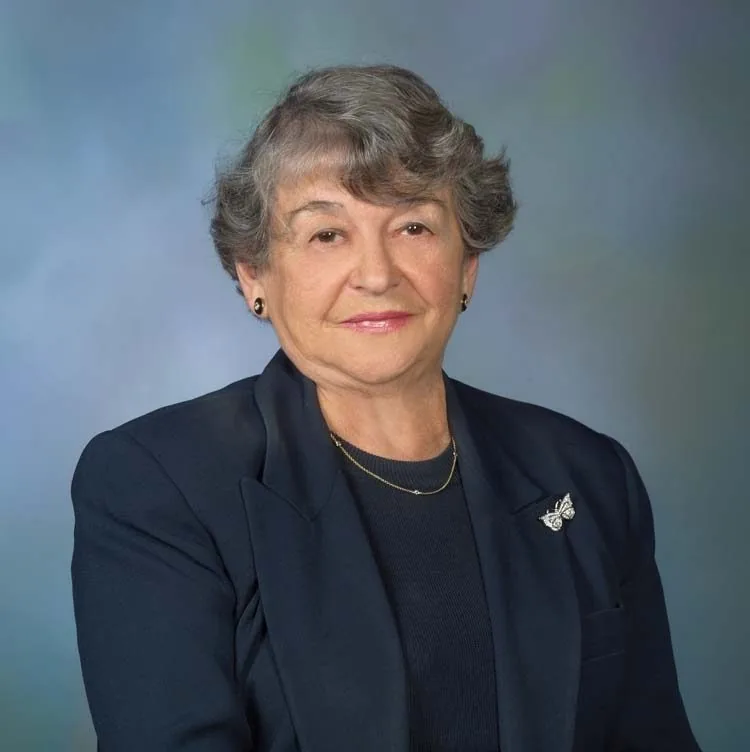
Evelyn Keiser brought classroom expertise. She earned a Bachelor of Science in Medical Technology at a time when few women entered the field. She then worked in hospitals across the country as a military wife before settling in South Florida.
When the two founders opened their school, they split the work. Evelyn Keiser focused on teaching and faculty development, while her son handled administration.
Her tenure lasted four decades, from 1977 to 2019, spanning roles as instructor, program director, and chief academic officer. Colleagues recall that she was often the first to arrive on campus each morning.
Recognition followed her career:
- Induction into the Florida Women’s Hall of Fame in 2015.
- Honorary doctorate recognizing her work on educational agreements between China and the United States.
- The Evelyn C. Keiser Teaching Excellence Award, named in her honor as the university’s highest faculty honor.
Evelyn Keiser passed away in February 2024 at the age of 100. Her name still marks the award given to faculty who excel at teaching.
From The Keiser School to Keiser University
Growth came in stages, each one tied to what students and employers asked for.
- 1977: The Keiser School opened in Fort Lauderdale, Florida.
- 1982: Paralegal and computer programs were added to the curriculum, and the school became Keiser Institute of Technology.
- 1986: Associate degree programs were introduced, and the institution became Keiser College.
- 2006: The addition of graduate degree programs led to the institution’s current name, Keiser University.
Today, the university operates campuses throughout Florida, international locations, a graduate school, and an online division. Students can choose from associate degrees, bachelor’s degrees, or graduate degrees with flexible delivery options such as on-campus, online, or hybrid format.
The residential Flagship Campus in West Palm Beach, Florida covers 100 acres. It brings dormitories, athletics, and campus life to students who want the traditional college experience. Seahawk Nation supports over 25 athletic teams.
What a Student-First Philosophy Looks Like in Practice
Keiser University built its academic model around one idea. As the Chancellor puts it, the mission has been clear from the beginning: students come first. The structure of the university should prove that rather than simply state it.

That structure shows up in several ways:
- A 14:1 student-to-faculty ratio keeps classes small by design.
- Students take one class at a time over four weeks, finishing each course before starting the next.
- Instructors bring real-world industry experience into the classroom.
- Student services support learners from enrollment through graduation.
The one-class-at-a-time format suits students balancing work, family, and school. They focus on a single subject for four weeks and take the final exam. No competing deadlines pile up across several courses.
The model serves a wide range of learners. Traditional students live on the Flagship Campus. Working adults attend evening and weekend classes at select campuses. Online learners study from anywhere. Military-affiliated students use their education benefits with support from dedicated advisors. International students join from countries around the world, and Spanish-speaking students enroll through the Latin Division.
How Employer Partnerships Shape What Students Study
Collaborative partnerships with employers form a core part of the university mission. More than 1,000 industry advisors help customize training for students at their jobsite, online, and on campus.
The partnership model works through Keiser’s active advisory boards for every program of study. Board members meet to review curriculum, equipment, and facilities, which keeps course content current with what the field requires. Many of those same advisors mentor students and alumni.
What Employer Input Delivers to Students:
- Curriculum reviewed twice a year by people who hire in the field.
- Equipment and facilities matched to current industry standards.
- Internships, externships, and clinical rotations built into many degrees.
- Mentorship from working professionals and Keiser University alumni.
Many degrees require an internship, externship, or clinical rotation, giving students supervised hands-on hours inside a professional setting before graduation.
Keiser University’s Contribution to Florida’s Workforce
The workforce need that prompted two founders to open a storefront school in 1977 has only grown. It now spans far more than one field. Florida employers continue to report workforce shortages across a range of industries. The Florida Chamber Foundation’s Florida Workforce Needs Study 2.0 tracked that gap. Florida Chamber of Commerce President Mark Wilson described talent as the state’s leading economic development tool, noting that employers still face “more open jobs than qualified people to fill them.”
That same study identified limited industry-education partnerships as one of the clearest gaps between what employers need and what graduates bring. How closely a university works with the businesses that hire its students matters.
The state has made progress. Lightcast’s Talent Attraction Scorecard ranked Florida the number one state in the country for attracting and developing a skilled workforce. That marks a third consecutive year at the top, with first-place scores for overall job growth. Sustaining that ranking depends on classroom seats, training sites, and faculty available today.
Keiser University contributes across the fields Florida employers are working hardest to staff, helping prepare graduates for in-demand careers while contributing to more than 40,000 jobs in the workforce. From healthcare and business to technology and other essential industries, the university’s career-focused programs help strengthen Florida’s workforce and meet evolving employer needs.
- Nursing and health care programs are offered at campuses statewide.
- Business, accounting, and marketing degrees supporting Florida’s commercial and financial sectors.
- Information technology and cybersecurity programs aligned to the state’s technology employers.
- Criminal justice and homeland security degrees serving public safety agencies.
- Education, engineering, and culinary programs filling regional workforce gaps.
Recognition for Student Success and Social Mobility
Outside recognition has followed the student-first approach. U.S. News & World Report ranked Keiser University No. 1 in the country for social mobility in its 2023 Best Colleges list. The university continues to rank among the nation’s best for advancing social mobility in the 2026 edition.
Access matters alongside outcomes. Over the last two years, nearly $76 million in scholarship funds went to academic and need-based students. The financial services team helps families understand aid options and guide students through the process.
As Keiser University approaches its 50th anniversary in 2027, its focus remains firmly on the future. Chancellor Arthur Keiser said the university looks forward to continuing its work to “meet the state’s most critical workforce needs.”
Why Keiser University
Nearly five decades of history have shaped a university that meets the needs of its students and the workforce. Here is what that history has built:
- A private, not-for-profit university accredited by SACSCOC.
- Over 100 programs at the associate, bachelor’s, master’s, and doctoral levels.
- A career-focused, student-first philosophy with small class sizes and personalized mentorship.
- Strong employer relationships and community partnerships across Florida.
- Flexible online, on-campus, and hybrid learning options.
- Programs serving traditional students, working adults, military-affiliated students, and international students.
- Dedicated student services from enrollment through graduation.
Questions about starting?
The Keiser admissions team can walk you through the process, and the admissions FAQ answers the most common questions. You can also review Keiser University facts, read more about why students choose Keiser, or contact a campus directly. Speaking with an admissions counselor remains the best way to get answers for your personal educational needs.
Frequently Asked Questions
Who founded Keiser University?
Dr. Arthur Keiser and his mother, Evelyn Keiser, founded the institution in 1977 as The Keiser School in Fort Lauderdale, Florida. Evelyn Keiser led teaching and faculty development while her son handled administration. She served the university for four decades, from 1977 to 2019, as an instructor, program director, and chief academic officer. Arthur Keiser continues to serve as Chancellor.
How long has Keiser University been operating?
The university has served students since 1977, which brings it close to 50 years of continuous operation. It began with one student in a two-room storefront and now serves approximately 20,000 students. More than 100,000 alumni have graduated over that period. The university will mark its 50th anniversary in 2027.
Has Keiser University always been called Keiser University?
The institution opened as The Keiser School in 1977. It became Keiser Institute of Technology in 1982 after adding paralegal and computer programs, then the name changed to Keiser College in 1986 when it began awarding associate degrees. The college became Keiser University in 2006 as its academic offerings expanded to include graduate programs.
Is Keiser University a family-founded institution?
Yes. A mother and son founded the school together in 1977. Evelyn Keiser co-founded the university alongside her son, Dr. Arthur Keiser. That founding relationship shaped a culture built around teaching quality and student outcomes.
What does it mean that Keiser University works with employer advisory boards?
Every program of study has an advisory board made up of industry professionals, community leaders, alumni, faculty, and staff. Those boards meet twice a year to review curriculum, equipment, and facilities. More than 1,000 industry advisors participate. For students, that means coursework is regularly reviewed against the skills employers currently need.
Is Keiser University accredited?
Yes. The Southern Association of Colleges and Schools Commission on Colleges accredits Keiser University as an institution. That accreditation authorizes the university to award certificates and degrees from the associate through the doctoral level. Full details appear on the university’s accreditation page.
Does Keiser University support military students?
Yes. Keiser University holds Military Friendly recognition and accepts a range of military education benefits. Dedicated military advisors work at each campus to help active-duty service members, veterans, and military families understand their options. Support covers benefit advising, flexible scheduling, and credit for prior learning where applicable.
How many degree programs does Keiser University offer?
Students can choose from more than 100 programs at the associate, bachelor’s, master’s, specialist, and doctoral levels. Fields include nursing, health care, business, information technology, criminal justice, education, culinary arts, and social sciences. Programs are offered on campus, online, or in a hybrid format depending on the degree.
How does Keiser University support Florida’s workforce?
The university builds programs around the fields where Florida employers struggle to staff, such as nursing and allied health. Employer advisory boards keep curriculum current, and many degrees require clinical rotations or internships that place students directly in workplaces. University operations and graduates support more than 44,000 jobs across the state.
Sources
- Keiser University, Keiser Facts.
- Keiser University, Letter from the Chancellor.
- Keiser University, Why Keiser.
- Keiser University, Remembering Evelyn C. Keiser, Co-Founder of Keiser University.
- Keiser University, Commemorating the Life of Ms. Evelyn Keiser: From Education to Family.
- Keiser University, Co-Founder Evelyn Keiser Honored by Temple University, September 15, 2008.
- Keiser University, Fact Book.
- Keiser University, Partnerships.
- Keiser University, Program Advisory Boards.
- Keiser University, Named No. 1 in Social Mobility, U.S. News & World Report 2023 Best Colleges.
- Keiser University, Ranks Among Nation’s Best for Social Mobility, U.S. News & World Report 2026 Best Colleges.
- Florida Commission on the Status of Women, Evelyn C. Keiser, Florida Women’s Hall of Fame, 2015.
- Florida Chamber Foundation, Florida Workforce Needs Study 2.0, June 26, 2024.
- Executive Office of the Governor, Florida Ranks #1 for Attracting and Developing a Skilled Workforce for Third Consecutive Year, September 16, 2025.
- Florida Politics, Keiser University Touts Economic Impact, Social Mobility During Its Day at the Capitol, February 2026.

 After experiencing profound personal loss, Sydney Nau found her purpose in nursing. Today, she leads with compassion while advancing her education and transforming lives through patient-centered care.


