

Advance Your Career with a Biotechnology Associate Degree Program
Request More Information
Biotechnology: Building a Purposeful Career
Keiser University offers an Associate of Science in Biotechnology designed for students seeking to launch careers in the rapidly growing biotechnology industry. This associate degree program prepares you with hands-on laboratory skills and scientific knowledge to work in research facilities, pharmaceutical companies, and biomedical technology settings.
Master Laboratory Techniques and Scientific Protocols
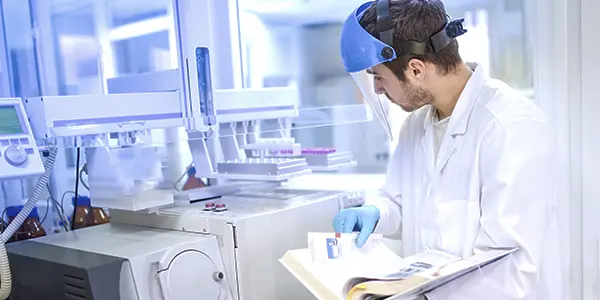
Build expertise in laboratory procedures, from cell culturing to genetic engineering, while learning to maintain laboratory instruments and analyze organic substances using advanced analytical methods.
Learn from Industry-Experienced Faculty
Learn from instructors who bring industry experience in the biotechnology and research field.
Gain Practical Experience Through Externships
Complete three externship rotations where you'll apply biotechnology courses knowledge in professional settings.
Prepare for Entry Level Positions in Growing Fields
Position yourself for biotechnology careers in quality assurance, regulatory affairs, medical science, and research with an applied science foundation that meets industry standards.
At a Glance
62.5
Credit Hours
10+
Courses
26
Months*
4
Week Terms
- Up to 12 credits of transfer credit*
- Career opportunities in pharmaceutical companies, research facilities, and more
- Available On-Campus
- Financial aid for those who qualify*
* Time to degree completion and the number of transfer credits are estimates, not intended as a guarantee, and can vary based on many case-by-case factors.
** Speak with a dedicated financial aid counselor to explore all your financial aid and funding options.
Biotechnology, AS Overview
Keiser University’s Associate of Science degree in Biotechnology trains students across many disciplines including genetics, biochemistry, molecular biology, and cell biology. Graduates possess the skills to perform laboratory tests using standardized laboratory procedures in various biotechnology careers. The biotechnology program emphasizes hands-on training with laboratory instruments, understanding of biological systems, and application of scientific protocols used throughout the biotech industry.
Students learn essential skills for working in pharmaceutical companies, medical laboratories, research facilities, and government agencies. The curriculum covers cell biology, genetic engineering, regulatory affairs, quality assurance, and environmental science while building communication skills necessary for professional laboratory settings. Through general education courses and specialized biotechnology courses, students develop both technical competence and critical thinking abilities.
The program prepares biotechnology graduates for entry level positions where they’ll conduct research, maintain laboratory instruments, analyze organic substances, and monitor experiments under the supervision of medical scientists or research scientists. Many graduates continue their education through bachelor’s degree programs in biomedical technology, health sciences, or applied science fields.
Program Objectives
- Laboratory Proficiency: Developing a student’s ability to perform proficiently on laboratory and testing procedures using standardized methods applied in pharmaceutical companies, medical laboratories, and research facilities.
- Critical Thinking Development: Building a student’s abilities in critical thinking and documentation, preparing them to analyze organic substances, interpret scientific protocols, and conduct research according to regulations and quality assurance standards.
- Career Preparation: Preparing students for entry level positions in the biotechnology field, including roles as biological technicians, laboratory assistants, and quality assurance specialists in the biotech industry.
Prerequisites for Major Courses
Students must complete general education courses with an overall grade average of 2.00 or higher before beginning biotechnology program major courses. This requirement allows students to build foundational knowledge in basic research, college algebra, and communication skills before tackling specialized biotechnology courses.
Program Highlights
The biotechnology associate degree features three externship experiences totaling 10.5 credit hours, providing professional experience in actual laboratory settings. Students work alongside biological technicians, medical scientists, and research scientists while learning regulatory affairs procedures, quality assurance protocols, and manufacturing operations standards.
The program includes comprehensive training in:
- Cell culturing techniques used in pharmaceutical companies
- Molecular biology methods for genetic engineering
- Clinical immunology procedures for medical laboratories
- Microbiology protocols for research facilities
- Laboratory instruments maintenance and operation
Small class sizes enable personalized attention from faculty with industry partners connections, creating opportunities for biotechnology internship placements and career networking within the biotechnology industry.
Estimated Student Costs
Required and Optional Fees for Programs: Fees are costs set by the university in addition to tuition (and room and board, if applicable). These fees may be required for your program or optional depending on the courses you take, and they support the costs associated with completing an approved program of study. Fees are defined in the university’s catalog or supplement and listed on the school’s billing statement or invoice. Fees that are optional will not be paid using GI Bill® benefits and will be the responsibility of the student choosing these additional options. For additional guidance, please see your Program Director or Admissions Counselor.
Accreditation Statuses
Keiser University is accredited by the Southern Association of Colleges and Schools Commission on Colleges (SACSCOC) to award associate, bachelor’s, master’s, and doctoral degrees. Learn more about Keiser University accreditation. While this program doesn’t require programmatic accreditation, the SACSCOC accreditation ensures Keiser University meets rigorous quality standards, which is crucial for students as it affects access to federal financial aid, the transferability of credits to other accredited schools, and recognition of degrees for programs and employers. This accreditation signifies that the institution adheres to standards that ensure educational quality and institutional effectiveness.
Program Outline
Available On-Campus
Associate of Science in Biotechnology Major Courses
The Associate of Science in Biotechnology at Keiser University trains students in genetics, biochemistry, molecular biology, and cell biology. This biotechnology program develops the technical skills to perform laboratory tests using standardized laboratory procedures in biotech industry settings. Students gain experience with regulatory affairs, quality assurance procedures, and FDA regulations while preparing for entry level positions as biological technicians or laboratory specialists.
To receive an Associate of Science in Biotechnology, students must earn 62.5 credit hours. Program requirements are as follows:
Lower Division Courses
| Biotechnology Major Courses (38.5 credit hours) | |
|---|---|
| Fundamentals of Biochemistry | 4.0 credit hours |
| Molecular and Cell Biology | 4.0 credit hours |
| Introduction to Biotechnology | 4.0 credit hours |
| Cell Culturing | 4.0 credit hours |
| Microbiology | 4.0 credit hours |
| Clinical Immunology | 4.0 credit hours |
| Genetics | 4.0 credit hours |
| Biotechnology Externship I | 3.5 credit hours |
| Biotechnology Externship II | 3.5 credit hours |
| Biotechnology Externship III | 3.5 credit hours |
| General Education Courses (24.0 credit hours) | |
|---|---|
| Behavioral Science (3.0 credit hours) | |
| Strategies for Success | 3.0 credit hours |
| Introduction to Psychology | 3.0 credit hours |
| Sociology | 3.0 credit hours |
| American History Pre 1876 | 3.0 credit hours |
| American History Since 1876 | 3.0 credit hours |
| Political Science | 3.0 credit hours |
| Communications (3.0 credit hours) | |
|---|---|
| Speech Communications | 3.0 credit hours |
| Computers (3.0 credit hours) | |
|---|---|
| Introduction to Computers | 3.0 credit hours |
| English (3.0 Credit Hours) | |
|---|---|
| English Composition I | 3.0 credit hours |
| English Composition II | 3.0 credit hours |
| Humanities/Fine Arts (3.0 credit hours) | |
|---|---|
| American Literature | 3.0 credit hours |
| English Literature | 3.0 credit hours |
| Mathematics (3.0 credit hours) | |
|---|---|
| College Algebra | 3.0 credit hours |
| Intermediate Algebra | 3.0 credit hours |
| Statistics | 3.0 credit hours |
| Natural Science (6.0 credit hours) | |
|---|---|
| General Biology | 3.0 credit hours |
| General Biology Laboratory | 1.0 credit hours |
Credit hours in parentheses indicate the required number of credit hours in each discipline.
If you’re someone who cares about …
Scientific discovery, wants to contribute to human health, and seeks a career that combines laboratory work with cutting-edge research,
a biotechnology degree might be your calling.
Biotechnology students bring curiosity, precision, and dedication to their work. They possess analytical minds and steady hands, with the patience to conduct research and the critical thinking skills to interpret complex biological processes.
Whether you’re drawn to genetic engineering, pharmaceutical development, or environmental biotechnology, this path provides the foundation to transform your interest in life science into meaningful impact.


Top 100 Hispanic-Serving Institutions
(2024, Hispanic Outlook on Education Magazine)

Best Online Ph.D. in Educational Leadership (No. 2) & Organizational Psychology (No. 3)
(2024, Forbes)

#2 Best 4-year graduation rates, private, nonprofit, nonresidential
(2023, The Chronicle of Higher Ed.)
What Jobs Can You Get with an Associate Degree in Biotechnology?
Biotechnology graduates from Keiser University enter a growing job market with strong job outlook projections. The biotechnology field offers career opportunities across pharmaceutical companies, research facilities, medical laboratories, and manufacturing operations. Entry level positions typically include roles as biological technicians, laboratory assistants, quality assurance specialists, and research associates. Many biotechnology students advance into specialized areas like regulatory affairs, biomedical technology, or pursue bachelor’s degree programs for research scientist positions.
Career Pathways in Biotechnology
- Biological technicians in research facilities
- Quality assurance specialists in pharmaceutical companies
- Laboratory technicians in medical laboratories
- Manufacturing operations assistants in biotech industry
- Research assistants
- Clinical laboratory support staff
- Environmental biotechnology technicians
- Technical support for laboratory instruments
- Biotechnology internship positions leading to full-time roles

Why Choose Keiser University?

Gain Job-Ready Skills for a Biotechnology Career:
- Advanced laboratory techniques for cell biology and molecular biology
- Quality assurance procedures
- Critical thinking abilities for problem-solving
- Technical skills for operating and maintaining laboratory instruments
- Understanding of biological systems and biological processes
- Entry level competencies for medical laboratories and biotech industry
- Scientific protocols for conducting research safely and effectively
- Analytical methods for studying genetic engineering applications
Keiser University offers career-focused degree programs designed to support working adults, traditional students, and career changers. With on-campus, online, and hybrid learning options, experienced faculty, and comprehensive student support, Keiser helps learners achieve their personal and professional goals at all levels.
See What Sets Keiser Apart
Jacqueline chose Keiser University because it offered the flexibility she needed to balance her education with her work schedule. After earning her bachelor’s degree in Biomedical Sciences, she was accepted into a master’s program in Biotechnology at a prestigious university in Baltimore, Maryland. She credits Keiser University with helping her build the knowledge, skills, and confidence that prepared her for graduate studies and supported her professional growth.
Since 1977, Keiser University has helped students turn their career ambitions into reality through its well-known Students First philosophy. With small class sizes, a focused one-class-at-a-time schedule, personalized support from faculty, flexible learning options, and career-driven programs in nursing, health care, technology, and beyond. Students gain a learning experience designed for success in an environment designed to help students succeed while finding the right path for their future.
Students Testimonials
At Keiser University we are here to help you succeed by providing the professional and academic foundation to meet your educational goals and objectives.
Take the Next Steps to Become a Biotechnology Professional

How to Apply
- Submit your online application
- Speak with an admissions advisor
- Provide transcripts or transfer credits
- Enroll and choose your start date
Keiser University’s biotechnology program prepares students for diverse career opportunities in one of the fastest-growing industries. With comprehensive laboratory training, experienced faculty mentorship, and practical externship experiences, our associate degree programs position you to enter the biotechnology field with confidence. Whether you’re interested in pharmaceutical companies, medical laboratories, or research facilities, Keiser provides the applied science education and hands-on training needed to launch a rewarding biotechnology career.
Accredited University
Keiser University is accredited by the Southern Association of Colleges and Schools Commission on Colleges (SACSCOC), ensuring your education meets rigorous academic standards.
Flexible Learning Options
Study on-campus at our Florida location with one class at a time. Small class sizes create an environment where faculty know students by name and provide individualized support throughout the program.
Financial Services
We’re here to help guide you through the financial aid process and provide assistance. Grants, scholarships, and financial aid available for students who qualify.
Top Questions About Earning a Biotechnology Associate Degree
Can I complete the biotechnology program fully online at Keiser University?
The biotechnology associate degree requires on-campus attendance for laboratory courses and hands-on training with laboratory instruments. While some general education courses may be available online, the biotechnology courses demand in-person instruction to develop proper laboratory techniques, cell culturing skills, and quality assurance procedures used in pharmaceutical companies and research facilities.
What career opportunities exist for biotechnology graduates?
Biotechnology careers span pharmaceutical companies, medical laboratories, research facilities, government agencies, and environmental science organizations. Entry level positions include biological technicians, quality assurance specialists, laboratory assistants, and manufacturing operations support roles.
Can I transfer credits from community colleges or other institutions?
Yes, Keiser University accepts transfer credits for undergraduate and graduate-level programs. Our admissions team will work with you to review your transcripts and determine your transfer eligibility. Credits transfer based on several factors including accreditation and course equivalency. Learn more about credit transfer requirements and eligibility requirements.
Does financial aid cover laboratory fees and externship costs?
Students in the Biotechnology program may qualify for grants, scholarships, and tuition assistance programs. Military veterans may also qualify for education benefits. Speak with a dedicated financial aid counselor to explore all available options and create a plan that fits your situation. Learn more about Keiser University’s Financial Services.
What accreditation does this biotechnology program hold?
Keiser University maintains institutional accreditation through the Southern Association of Colleges and Schools Commission on Colleges (SACSCOC). While this program doesn’t require programmatic accreditation, the SACSCOC accreditation ensures Keiser University meets rigorous quality standards, which is crucial for students as it affects access to federal financial aid, the transferability of credits to other accredited schools, and recognition of degrees for graduate programs and employers. This accreditation signifies that the institution adheres to standards that ensure educational quality and institutional effectiveness.
How long does completing a biotechnology associate degree take?
Most students complete the biotechnology degree in approximately 20 months when attending full-time. The program uses 4-week terms, with one course at a time. Students who transfer credits may finish faster. Your academic advisor creates a personalized schedule based on your prerequisite courses completion, transfer credits, and career goals.
How much does earning this biotechnology degree cost?
Tuition at Keiser University varies by degree program. Keiser offers financial aid, military and veteran benefits, scholarships, and tuition reimbursement to those who qualify. For more detailed cost information, please contact an admissions advisor. Get more information about Keiser University’s tuition and costs.
What courses prepare students for working in pharmaceutical companies?
Core biotechnology courses directly applicable to pharmaceutical companies include Fundamentals of Biochemistry, Molecular and Cell Biology, Cell Culturing, Clinical Immunology, and Genetics. These courses teach the laboratory techniques, quality assurance procedures, and regulatory affairs knowledge used daily in pharmaceutical manufacturing operations. The three externship rotations often place students in pharmaceutical companies, medical laboratories, or research facilities, providing real-world experience with communication skills development and technical support responsibilities.
This Program is Available at the Following Campuses


Related Programs



























Connect with a Counselor
Connect with a Counselor


