

Advance Your Career with a Medical Laboratory Technician Associate’s Degree
Request More Information
Medical Laboratory Technician: Building a Foundation for Healthcare Excellence
Keiser University offers an Associate of Science degree in Medical Laboratory Technician designed for students seeking rewarding careers in clinical laboratory sciences. Our MLT program prepares you to become a skilled member of the medical laboratory team, performing essential diagnostic tests that physicians rely on every day.
Develop Essential Laboratory Testing Skills
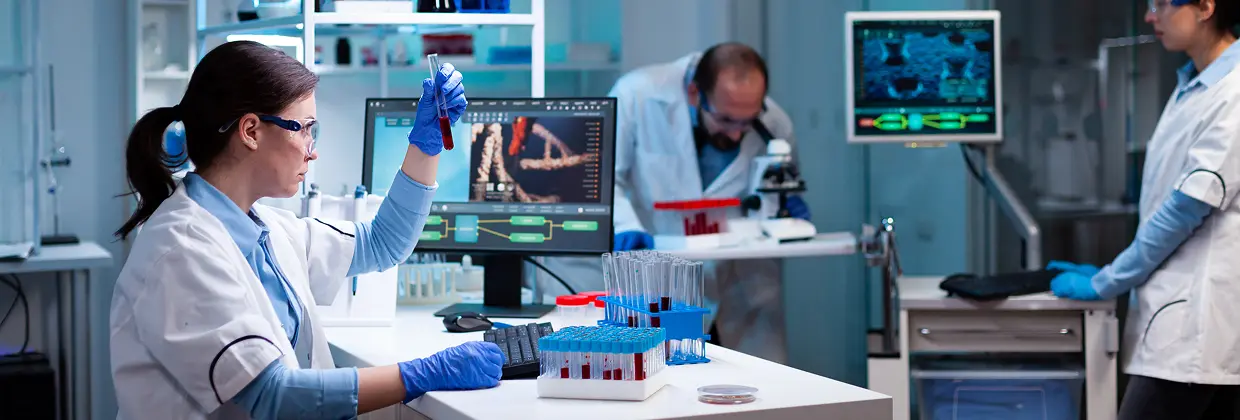
Build hands-on skills in clinical chemistry, hematology, microbiology, immunohematology, and urinalysis through comprehensive training in detailed manual tests and automated procedures.
Learn from Experienced Clinical Laboratory Professionals
Study under faculty with real-world experience in hospital labs, diagnostic laboratories, and clinical settings across multiple specialties.
Study On-Campus with Hands-On Training
Complete coursework on campus with access to professional laboratory equipment and clinical practicum sites where you'll apply your skills in real healthcare settings.
Prepare for National Certification and Licensure
Graduates are prepared to sit for the ASCP Board of Certification national exam and Florida state licensure through rigorous academic preparation and practical experience.
At a Glance
63
Credit Hours
20
Courses
20
Months*
4
Week Terms
- Up to 12 credits of transfer credit*
- Career opportunities in hospitals, diagnostic laboratories, physician offices, and more
- Available On-Campus
- Financial aid for those who qualify**
* Time to degree completion and the number of transfer credits are estimates, not intended as a guarantee, and can vary based on many case-by-case factors.
** Speak with a dedicated financial aid counselor to explore all your financial aid and funding options.
Medical Laboratory Technician Program Overview
Keiser University’s Associate of Science degree in Medical Laboratory Technology educates and prepares students to function effectively and collaboratively as a member of a medical laboratory team. The program provides exposure to various medical laboratory tests by nationally standardized practices as defined within the scope of the profession. Students gain competency in clinical chemistry, hematology, microbiology, immunohematology, serology/immunology, and urinalysis. Through sequential coursework and clinical practicum experiences, students develop the critical thinking skills and technical proficiency needed to perform routine tests and analyze patient samples. The curriculum emphasizes both detailed manual tests and modern automated procedures, ensuring graduates can work competently with all types of laboratory equipment.
Program Mission
Keiser University’s Associate of Science degree program in Medical Laboratory Technician educates and prepares students to function effectively and collaboratively as a member of a medical laboratory team. The program provides exposure to various laboratory tests by nationally standardized laboratory practices as defined within the scope of the profession.
Program Goals
- Students will acquire the knowledge and skill development to competently perform standardized laboratory test procedures.
- Students will acquire critical thinking and problem-solving skills to effectively practice in the profession as a medical laboratory technician.
- Students will model behaviors of professionalism in the clinical laboratory setting
- Students will possess the necessary breadth of knowledge and skills for obtaining entry- level employment as a professional medical laboratory technician.
Prerequisites
Students must meet the requirements below before beginning major courses in the medical laboratory technician program:
- Background check and drug screen;
- General education courses must be completed with a grade average of 3.0 on a scale of 4.0.
MLT Students Handbooks
MLT Clinical Practicum Sites
Program Outcomes
- Click Here to review MLT programmatic outcomes.
Program Highlights
- Hands-On Clinical Experience – Students complete two clinical practicum courses providing real-world clinical experience in professional settings.
- Comprehensive Laboratory Disciplines – The medical laboratory technician curriculum covers all major areas of clinical pathology, including clinical chemistry, hematology, microbiology, immunohematology, serology/immunology, and urinalysis. This broad exposure prepares graduates to work competently across multiple departments.
- NAACLS Accreditation – Both the Fort Lauderdale and Orlando campuses hold full accreditation from the National Accrediting Agency for Clinical Laboratory Sciences (NAACLS), ensuring the MLT program meets rigorous national standards for education.
- National Certification Preparation – The curriculum aligns with the requirements of the American Society of Clinical Pathology (ASCP) Board of Certification and American Medical Technologists, preparing students to sit for the national exam upon graduation.
- Pathway to Bachelor’s Degree – Graduates can continue their education through Keiser University’s Bachelor of Science in Medical Laboratory Science, a degree completion pathway for clinical laboratory technicians seeking to become medical laboratory scientists. This bachelor’s degree opens opportunities for career advancement.
- Small Class Sizes and Personalized Attention – Keiser University’s commitment to student success includes maintaining manageable class sizes, allowing faculty to provide individualized instruction and support throughout the MLT program.
Estimated Student Costs
Required and Optional Fees for Programs: Fees are costs set by the university in addition to tuition (and room and board, if applicable). These fees may be required for your program or optional depending on the courses you take, and they support the costs associated with completing an approved program of study. Fees are defined in the university’s catalog or supplement and listed on the school’s billing statement or invoice. Fees that are optional will not be paid using GI Bill® benefits and will be the responsibility of the student choosing these additional options. For additional guidance, please see your Program Director or Admissions Counselor.
Accreditation Status
Keiser University’s Medical Laboratory Technician programs, Fort Lauderdale and Orlando campuses, are accredited by the National Accrediting Agency for Clinical Laboratory Sciences (NAACLS), 5600 N. River Road, Suite 720, Rosemont, Illinois 60018, 773-714-8880. E-Mail: info@naacls.org, Website: www.naacls.org.
Keiser University’s Medical Laboratory Technician program at the Clearwater campus is seeking initial accreditation with the National Accrediting Agency for Clinical Laboratory Sciences (NAACLS), 5600 N. River Road, Suite 720, Rosemont, Illinois 60018, 773-714-8880. E-Mail: info@naacls.org Website: www.naacls.org.
State Licensure Disclosure
Program Outline
Available On-Campus
Associate of Science in Medical Laboratory Technician Degree Courses
The Associate of Science in Medical Laboratory Technician at Keiser University prepares competent entry-level clinical laboratory technicians to perform standardized procedures. Focused on clinical chemistry, hematology, microbiology, immunohematology, and urinalysis, the MLT program equips students to function as vital members of the healthcare team. Through an advanced medical laboratory technician curriculum in laboratory science, clinical pathology, and diagnostic procedures, students gain the practical skills and knowledge to perform medical tests that directly impact patient diagnosis and treatment decisions.
To receive an Associate of Science degree in Medical Laboratory Technician, students must complete 63 credit hours as follows:
Lower Division Courses
| Medical Laboratory Technician Major Courses (37.0 credit hours) | |
|---|---|
| * Clinical Chemistry I | 3.0 credit hours |
| Clinical Chemistry II | 3.0 credit hours |
| * Clinical Practicum Part I | 3.5 credit hours |
| Clinical Practicum Part II | 3.5 credit hours |
| Urinalysis | 3.0 credit hours |
| * Hematology I | 3.0 credit hours |
| Hematology II | 3.0 credit hours |
| * Microbiology I | 3.0 credit hours |
| Microbiology II | 3.0 credit hours |
| Serology/Immunology | 3.0 credit hours |
| Immunohematology I | 3.0 credit hours |
| Immunohematology II | 3.0 credit hours |
* Must be completed with a grade of “C” or higher before students are enrolled in the “II” portion of the subjects.
| General Education Courses (26.0 credit hours) | |
|---|---|
| Behavioral/Social Science (3.0 credit hours) | |
| American History Pre 1876 | 3.0 credit hours |
| American History Since 1876 | 3.0 credit hours |
| Strategies for Success | 3.0 credit hours |
| Political Science | 3.0 credit hours |
| Introduction to Psychology | 3.0 credit hours |
| Sociology | 3.0 credit hours |
| Communications (3.0 credit hours) | |
|---|---|
| Speech | 3.0 credit hours |
| Computers (3.0 credit hours) | |
|---|---|
| Introduction to Computers | 3.0 credit hours |
| English (3.0 credit hours) | |
|---|---|
| English Composition I | 3.0 credit hours |
| English Composition II | 3.0 credit hours |
| Humanities/Fine Arts (3.0 credit hours) | |
|---|---|
| American Literature | 3.0 credit hours |
| English Literature | 3.0 credit hours |
| Mathematics (3.0 credit hours) | |
|---|---|
| College Algebra | 3.0 credit hours |
| Intermediate Algebra | 3.0 credit hours |
| College Mathematics | 3.0 credit hours |
| Applications of Mathematics | 3.0 credit hours |
| Statistics | 3.0 credit hours |
| Natural Science (8.0 credit hours) | |
|---|---|
| Human Anatomy and Physiology I | 4.0 credit hours |
| Human Anatomy and Physiology II | 4.0 credit hours |
Note: Medical Laboratory Technician graduates who wish to seek certification other than the American Society of Clinical Pathology Board of Certification MLT level may need to complete additional courses.
If you’re someone who cares about …
Precision, enjoys solving puzzles, and finds satisfaction in work that directly helps diagnose and treat patients,
a degree in medical laboratory technology might be your calling.
Students in clinical laboratory sciences possess strong attention to detail, analytical thinking skills, and the discipline to follow standardized procedures.
Whether you’re drawn to blood banking, clinical chemistry, or microbiology, this career path gives you the scientific foundation and skills to become an essential member of the healthcare team.

Top 100 Hispanic-Serving Institutions
(2024, Hispanic Outlook on Education Magazine)

Best Online Ph.D. in Educational Leadership (No. 2) & Organizational Psychology (No. 3)
(2024, Forbes)

#2 Best 4-year graduation rates, private, nonprofit, nonresidential
(2023, The Chronicle of Higher Ed.)
What Jobs Can You Get with a Medical Laboratory Technician Degree?
Graduates of Keiser University’s MLT program prepare for entry-level positions as clinical laboratory technicians in hospitals, diagnostic laboratories, physician offices, and other healthcare settings. According to the Bureau of Labor Statistics, job growth for clinical laboratory technicians remains strong, with opportunities expanding as the healthcare industry grows. This associate degree supports aspiring lab technicians by providing the knowledge and practical skills to perform routine tests, analyze body fluids, examine biological specimens, and contribute to patient diagnosis across all areas of clinical pathology.
Career Pathways in Medical Laboratory Science
- Hospital clinical laboratories
- Diagnostic laboratories
- Physician offices
- Public health laboratories
- Blood banking facilities
- Research laboratories
- Pharmaceutical companies
- Veterinary laboratories
- Laboratory management
- Clinical laboratory technician positions

Why Choose Keiser University?

Gain Job-Ready Skills for a Medical Laboratory Technician Career
- Clinical chemistry procedures and instrumentation
- Hematology testing and cell identification
- Microbiology culture techniques and organism identification
- Urinalysis and body fluid analysis
- Quality control and safety standards
- Automated equipment operation and maintenance
- Medical laboratory tests interpretation
- Data analysis and problem-solving
- Patient care through accurate testing and timely results
- Detailed manual tests when automated methods aren’t available
Keiser University offers career-focused degree opportunities designed to support working adults, traditional students, and career changers. With multiple on-campus locations and learning options, experienced faculty, and comprehensive student support, Keiser helps learners achieve their personal and professional goals at all levels.
See What Sets Keiser Apart
Nadja Skeete, a Medical Laboratory Technician student at Keiser, shares her inspiring journey from being an elementary music teacher in St. Thomas, U.S. Virgin Islands, to pursuing a new path in the medical field at Keiser University. After experiencing the devastation of two hurricanes in 2018, she began reflecting on her purpose and realized she wanted to do more in a career that combined her passion for science, empathy, and helping others. Drawn to the importance of laboratory work in patient care and diagnosis, she decided to pursue a healthcare education that aligned with her personality and desire to make a difference.
She explains that her experience at Keiser has been overwhelmingly positive from the start, especially appreciating the supportive admissions process, accelerated one-class-per-month format, and small classroom environment where instructors truly know their students. She also valued that Keiser accepted her previous transfer credits, helping make her educational transition smoother.
Students Testimonials
At Keiser University we are here to help you succeed by providing the professional and academic foundation to meet your educational goals and objectives.
Take the Next Steps to Become a Clinical Laboratory Technician

How to Apply
- Submit your online application.
- Speak with an admissions advisor.
- Provide transcripts or transfer credits.
- Enroll and choose your start date.
Keiser University’s medical laboratory technician (MLT) program prepares dedicated students for rewarding careers performing essential diagnostic tests that physicians and healthcare providers depend on daily. With NAACLS-accredited programs at our Fort Lauderdale and Orlando campuses, comprehensive hands-on training in professional clinical settings, and experienced faculty committed to your success, Keiser provides the education and practical skills you need to launch your career in clinical laboratory sciences. Our graduates are eligible to sit for the national exam and apply for Florida state licensure, opening doors to employment opportunities in hospitals, diagnostic laboratories, physician offices, and other healthcare facilities across the state and nation. According to labor statistics from the Bureau of Labor Statistics, demand for qualified lab technicians continues growing, with competitive wages and strong job outlook for certified professionals.
Accredited University
Keiser University is accredited by the Southern Association of Colleges and Schools Commission on Colleges (SACSCOC), ensuring your education meets rigorous academic standards.
Flexible Learning Options
Study online or on-campus at Florida locations. Choose one class at a time, on-campus, online, or hybrid. Evening and weekend options are available for working adults at select campuses.
Financial Services
We’re here to help guide you through the financial aid process and provide assistance. Grants, scholarships, and financial aid available for students who qualify.
Top Questions About Earning a Medical Laboratory Technician Degree
Can I complete the medical laboratory technology program online at Keiser University?
No. The MLT program requires extensive hands-on training with specialized laboratory equipment and supervised clinical practicum experiences. Students must attend on-campus classes to complete the training successfully. This on-campus requirement ensures you gain the practical skills and competencies needed for professional certification and employment as a clinical laboratory technician.
What's the difference between a Clinical Laboratory Technician and a Medical Laboratory Scientist?
A clinical laboratory technician (CLT) is generally the same as a medical laboratory technician (MLT), holds an associate degree and performs routine tests under the supervision of a medical laboratory scientist or laboratory manager. A medical laboratory scientist (MLS), also called a medical laboratory technologist, holds a bachelor’s degree and can perform more complex testing, supervise operations, and make independent decisions about procedures. What technologists perform includes advanced testing, quality control oversight, and training of laboratory personnel. Keiser University offers both the Associate of Science in Medical Laboratory Technician and a Bachelor of Science in Medical Laboratory Science (a completion pathway for clinical laboratory technicians seeking to advance their careers and earn higher salaries).
What careers can I pursue with an MLT Associate Degree?
Graduates of the medical laboratory technician program can work as clinical laboratory technicians in hospital clinical laboratories, diagnostic laboratories, physician offices, reference laboratories, blood banks, public health laboratories, and research facilities.
What is the career forecast for a medical laboratory technician?
According to labor statistics, the median annual wage for lab technicians varies by location and specialization, with job growth projected to remain steady. With clinical experience and additional education through a bachelor’s degree, you can advance in your career or pursue certification as a medical laboratory scientist, which typically offers higher salaries with additional responsibilities.
Can I transfer credits from another institution?
Yes, Keiser University accepts transfer credits for undergraduate and graduate-level programs. Our admissions team will work with you to review your transcripts and determine your transfer eligibility. Credits transfer based on several factors including accreditation and course equivalency. Learn more about credit transfer requirements and eligibility requirements.
Is financial aid available for the medical laboratory technology program?
Absolutely. Students enrolled in the MLT program can access federal financial aid resources, including Pell Grants, federal student loans, and other assistance for those who qualify. Keiser University’s financial aid advisors work with each student to explore all available options creating a personalized funding plan. Learn more about Keiser University’s Financial Services.
Are these programs accredited?
Yes. Keiser University holds institutional accreditation from the Southern Association of Colleges and Schools Commission on Colleges (SACSCOC) to award associate, bachelor’s, master’s, and doctoral degrees. Learn more about Keiser University accreditation.
Keiser University’s Medical Laboratory Technician programs, Fort Lauderdale and Orlando campuses, are accredited by the National Accrediting Agency for Clinical Laboratory Sciences (NAACLS). Keiser University’s Medical Laboratory Technician program at the Clearwater campus is seeking initial accreditation with the National Accrediting Agency for Clinical Laboratory Sciences (NAACLS).
What certifications can I earn after completing the medical laboratory technician program?
Upon successful completion of the medical laboratory technology program, graduates are eligible to sit for the certification exam offered by the American Society of Clinical Pathology (ASCP) Board of Certification.
How long does it take to complete the medical laboratory technician program?
The MLT program takes approximately 20 months to complete when attending full-time. The exact completion time varies based on your course load, any transfer credits, and your individual academic progress.
How much does it cost to earn this degree?
Tuition at Keiser University varies by degree program. Keiser offers financial aid, military and veteran benefits, scholarships, and tuition reimbursement to those who qualify. For more detailed cost information, please contact an admissions advisor. Get more information about Keiser University’s tuition and costs.
What courses are required in the medical laboratory technician curriculum?
The medical laboratory technology major courses include Clinical Chemistry I and II, Hematology I and II, Microbiology I and II, Immunohematology I and II, Serology/Immunology, Urinalysis, and two Clinical Practicum courses. You’ll also complete general education requirements including Human Anatomy and Physiology I and II, English Composition, Speech Communications, Introduction to Computers, Mathematics, and courses in Behavioral/Social Sciences and Humanities/Fine Arts. All courses must be completed sequentially, and certain courses require a minimum grade of “C” before you can advance to the next level.
What are the clinical practicum experiences like?
Clinical practicum courses provide hands-on clinical experience in professional settings, including hospitals, diagnostic laboratories, and other healthcare facilities. Under the supervision of experienced laboratory personnel and laboratory managers, you’ll apply classroom knowledge by performing actual medical tests on patient samples, operating professional cell counters and other equipment, following quality control procedures, and participating in all aspects of operations. What technologists perform during these rotations includes routine tests, detailed manual tests, and patient care support through accurate and timely test results. These practical experiences are essential for building confidence and competence before you enter the workforce as a certified clinical laboratory technician.
Will I be prepared for the job market after graduation?
The medical laboratory technician program curriculum aligns with national standards and ASCP certification requirements, ensuring you gain the knowledge and practical skills employers seek. Clinical practicum experiences provide real-world training in professional clinical settings, and many students secure employment at their practicum sites or through connections made during their clinical rotations. The combination of NAACLS accreditation, hands-on training, and Keiser’s career services support positions graduates for success in the healthcare job market. Graduates can pursue additional education through a bachelor’s degree in Medical Laboratory Science to further advance their careers.


Related Programs

































Connect with a Counselor
Connect with a Counselor


