

Launch Your Career with an Associate Degree in Nuclear Medicine Technology
Request More Information
Nuclear Medicine Technology AS: Building Your Future in Medical Imaging
The Nuclear Medicine Technology Associate’s degree at Keiser University is designed for students ready to enter this specialized field of health sciences. Our nuclear medicine program prepares you to work with advanced imaging equipment and radioactive materials to help physicians diagnose and treat medical conditions.
Master Advanced Medical Imaging Techniques
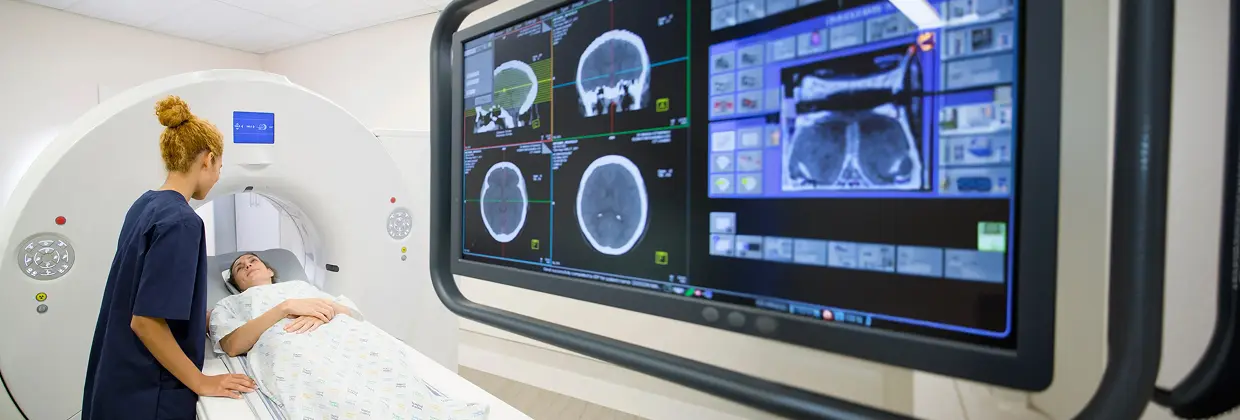
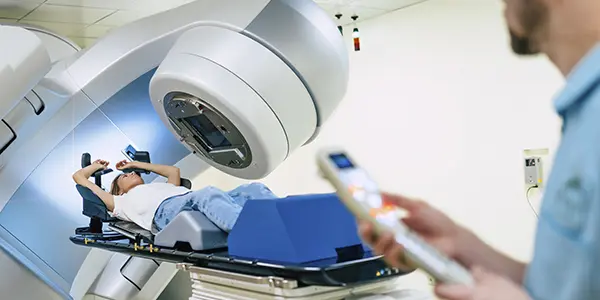
Learn to operate imaging equipment including positron emission tomography (PET) and CT scanners while following strict safety procedures to minimize radiation exposure.
Train with Experienced Healthcare Professionals
Learn from under faculty with real-world industry experience into every classroom and clinical rotation alongside other healthcare workers.
Hands-on Training Approach
Access hands-on clinical training at affiliated imaging clinics and hospitals while completing coursework designed for your success in nuclear medicine technology.
Enter a Growing Healthcare Field
Prepare for national certification exams through the American Registry of Radiologic Technologists and the Nuclear Medicine Technology Certification Board to become a certified nuclear medicine technologist.
At a Glance
93
Credit Hours
25
Courses
24
Months*
4
Week Terms
- Up to 12 credits of transfer credit*
- Career opportunities in hospitals, imaging centers, and diagnostic facilities
- Available On-Campus
- Financial aid for those who qualify**
* Time to degree completion and the number of transfer credits are estimates, not intended as a guarantee, and can vary based on many case-by-case factors.
** Speak with a dedicated financial aid counselor to explore all your financial aid and funding options.
Nuclear Medicine Technology Program Overview
Keiser University’s nuclear medicine technology program teaches you to use radioactive drugs and advanced imaging equipment to help physicians diagnose and treat medical conditions. The program covers radiation safety procedures, patient care, medical procedures, and the physics and chemistry behind nuclear medicine. You’ll learn about the use of radioactive material to visualize, diagnose, and treat pathology through proper utilization of specialized equipment and techniques.
Clinical rotations at affiliated medical facilities give you real-world experience before completion, preparing students to enter the workforce as a competent nuclear medicine technologist.
Program Mission
The Nuclear Medicine Technology Program is committed to equipping students with the knowledge 344 and skills required of a nuclear medicine technologist through quality education, community partnerships and fostering students’ achievement.
Program Goals
- Communication and Collaboration Students will develop communication skills to effectively provide patient care in a team-centered healthcare environment.
- Clinical Competence Students will be able to perform entry-level nuclear medicine technology procedures by program completion.
- Professional Development Students will cultivate the professional and ethical competencies essential for success as entry-level nuclear medicine technologists.
- Safety Protocols Students will adhere to safety and regulatory practices (ALARA) relevant to practice as a nuclear medicine technologist.
Prerequisites
Students must meet the requirements below before beginning major courses in the nuclear medicine technology program:
- Background check and drug screening when applicable
- Minimum grade of “C” for general education courses. Successful completion of the following prerequisite courses: Human Anatomy and Physiology I & II, General Physics, College Algebra and General Chemistry with Lab.
- Cumulative grade average of 3.0 on a scale of 4.0
Student Learning Objectives/Outcomes
-
Students will develop verbal and written communication skills to effectively interact within a healthcare setting
-
Students will demonstrate knowledge of ALARA practices and regulatory practices relevant to all aspects of radiation safety in Nuclear Medicine Technology
-
Students will demonstrate knowledge of professional ethical practices and appropriate patient care in a team centered healthcare setting
-
Students will demonstrate proficiency in related math and physics content
-
Students will demonstrate successful performance in nuclear medicine procedures
Program Highlights
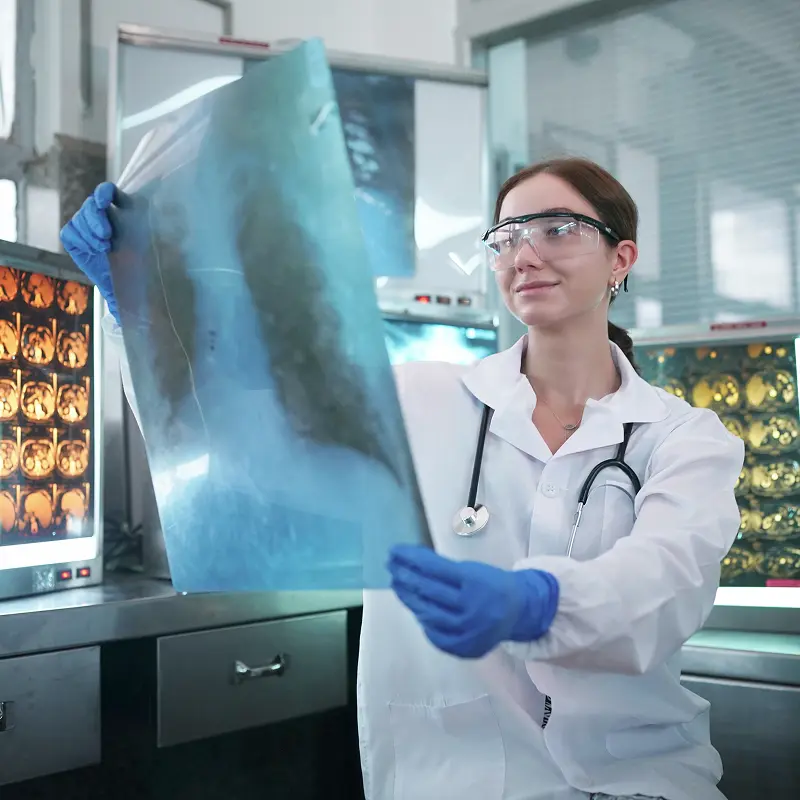
The program combines classroom instruction with extensive clinical education at affiliated healthcare facilities including hospitals and imaging clinics. Clinical assignments provide hands-on training with real patients, teaching students to explain medical procedures, turn patients for optimal imaging, and maintain detailed records. Students complete clinical rotations, gaining experience across different medical procedures and patient populations. Nuclear medicine technologists work with radioactive isotopes and imaging equipment to treat patients and help physicians treat medical conditions. Students learn to operate imaging equipment and provide technical support to physicians and other healthcare workers. The capstone course prepares students for national certification examinations and professional practice in various educational programs.
Program Outcomes
Published Outcomes
Graduate achievement data is an indicator of program effectiveness, demonstrating the extent to which a program achieves its goals. The current report on graduate achievement data, identified by program, is available on the JRCNMT website by clicking on the following link: Graduate Outcomes Report.
Estimated Student Costs
Required and Optional Fees for Programs: Fees are costs set by the university in addition to tuition (and room and board, if applicable). These fees may be required for your program or optional depending on the courses you take, and they support the costs associated with completing an approved program of study. Fees are defined in the university’s catalog or supplement and listed on the school’s billing statement or invoice. Fees that are optional will not be paid using GI Bill® benefits and will be the responsibility of the student choosing these additional options. For additional guidance, please see your Program Director or Admissions Counselor.
Clinical Affiliates
State Licensure Disclosure
Accreditation Status
Keiser University’s Lakeland campus Nuclear Medicine Technology program is accredited by the Joint Review Committee on Educational Programs in Nuclear Medicine Technology 2000 W. Danforth Rd. STE 130, #203 Edmond, OK 73003 Phone: (405) 285-0546 mail@jrcnmt.org
Program Outline
Available On-Campus
Associate of Science in Nuclear Medicine Technology Degree Courses
The nuclear medicine technology program at Keiser University prepares students to become skilled healthcare professionals who use radioactive material and specialized equipment to create diagnostic images. Most nuclear medicine technologists work in hospitals and imaging clinics, where they explain medical procedures to patients and collaborate with other healthcare workers to treat patients effectively. Through comprehensive education in radiation safety, medical procedures, and patient care, students gain the technical skills and knowledge needed for certification. The program combines classroom instruction with clinical rotations, giving you hands-on experience in real healthcare settings before completion.
To receive an Associate of Science degree in Nuclear Medicine Technology, students must complete 93 credit hours as follows:
Lower Division Courses
| Nuclear Medicine Technology Major Courses (63.0 credit hours) | |
|---|---|
| Nuclear Medicine Seminar | 5.0 credit hours |
| Radiation Safety and Health Physics | 5.0 credit hours |
| Nuclear Medicine Instrumentation | 5.0 credit hours |
| Nuclear Medicine Methodology I | 5.0 credit hours |
| Nuclear Medicine Physics | 5.0 credit hours |
| Nuclear Medicine Methodology II | 5.0 credit hours |
| PET/CT Procedures and Radiopharmacy | 5.0 credit hours |
| Methodology III | 5.0 credit hours |
| Clinical Rotation I | 3.0 credit hours |
| Clinical Rotation II | 3.0 credit hours |
| Clinical Rotation III | 3.0 credit hours |
| Clinical Rotation IV | 3.0 credit hours |
| Clinical Rotation V | 3.0 credit hours |
| Clinical Rotation VI | 3.0 credit hours |
| Nuclear Medicine Capstone Course | 5.0 credit hours |
| General Education Courses (30.0 credit hours) | |
|---|---|
| Behavioral/Social Science (3.0 credit hours) | |
| Introduction to Psychology | 3.0 credit hours |
| Communications (3.0 credit hours) | |
|---|---|
| Speech Communication | 3.0 credit hours |
| English (3.0 Credit Hours) | |
|---|---|
| English Composition I | 3.0 credit hours |
| English Composition II | 3.0 credit hours |
| Humanities/Fine Arts (3.0 credit hours) | |
|---|---|
| American Literature | 3.0 credit hours |
| English Literature | 3.0 credit hours |
| Mathematics (3.0 credit hours) | |
|---|---|
| College Algebra | 3.0 credit hours |
| Natural Science (15.0 credit hours) | |
|---|---|
| Human Anatomy and Physiology I | 4.0 credit hours |
| Human Anatomy and Physiology II | 4.0 credit hours |
| General Chemistry | 3.0 credit hours |
| General Chemistry Lab | 1.0 credit hour |
| General Physics | 3.0 credit hours |
Note: Each course in the Nuclear Medicine Technology major is a prerequisite for the subsequent course and therefore must be passed with a minimum “C” grade in order to proceed successfully through the program.
If you’re someone who cares about …
Working with cutting-edge medical imaging technology, helping physicians diagnose serious medical conditions, and making a real difference in patient care,
a career in nuclear medicine technology could be your calling.
Nuclear medicine technologists combine technical precision with compassionate patient care. They are detailed and enjoy sciences like biology, chemistry, and physics.
Whether you’re drawn to diagnostic imaging, cancer treatment, or cardiac care, the nuclear medicine tech program gives you the specialized training to turn your interest in healthcare into a meaningful profession.

Top 100 Hispanic-Serving Institutions
(2024, Hispanic Outlook on Education Magazine)

Best Online Ph.D. in Educational Leadership (No. 2) & Organizational Psychology (No. 3)
(2024, Forbes)

#2 Best 4-year graduation rates, private, nonprofit, nonresidential
(2023, The Chronicle of Higher Ed.)
What Jobs Can You Get with a Nuclear Medicine Technology Degree?
Graduates of Keiser University’s nuclear medicine program qualify to sit for national certification examinations through the American Registry of Radiologic Technologists (ARRT-N) and the Nuclear Medicine Technology Certification Board (NMTCB). Most employers require certification before hiring nuclear medicine technologists. After passing these exams, certified nuclear medicine technologists may pursue employment in hospitals, outpatient imaging clinics, cancer treatment centers, cardiac care facilities, and research institutions. According to the Bureau of Labor Statistics, the field offers job growth, competitive median annual wage, and the satisfaction of playing a vital role in patient diagnosis and treatment. Nuclear medicine technologists work alongside physicians, radiologic technologists, and other healthcare workers to treat patients and treat medical conditions effectively.
Career Pathways in Nuclear Medicine Technology
- Medical imaging departments in hospitals
- Outpatient diagnostic imaging centers
- Cancer treatment facilities
- Cardiac imaging clinics
- Research medical centers
- University medical centers
- Mobile imaging services
- PET/CT imaging centers
- Surgical centers with imaging capabilities
Why Choose Keiser University?

Gain Job-Ready Skills for a Nuclear Medicine Career
- Radiation safety procedures to minimize radiation exposure
- Patient care and communication to explain medical procedures
- Medical imaging equipment operation
- Preparing radioactive materials
- Quality control procedures and maintaining detailed records
- Human anatomy and physiology knowledge
- Biology, chemistry, and physics principles
- Clinical documentation skills and detailed records
- Emergency response procedures for nuclear disaster preparedness
- Professional ethics and legal standards
- Critical thinking to treat patients and treat medical conditions
Keiser University offers career-focused degree programs designed to support working adults, traditional students, and career changers. With on-campus and hybrid learning options, experienced faculty under the program director’s leadership, and comprehensive student support, Keiser helps learners achieve their personal and professional goals at all levels across health professions.
See What Sets Keiser Apart
Brian Latimer, program director for the Nuclear Medicine Technology program, explains how nuclear medicine is a specialized field of radiology focused on studying how the body functions rather than just anatomy. He describes how students are trained to perform imaging procedures that help diagnose diseases, particularly in cardiac and oncology patients. Brian also highlights the growing role of nuclear medicine in cancer treatment, where new medications can both detect and treat cancer while improving patients’ quality of life. He emphasizes preparing students to become skilled, career-ready technologists by combining real-world faculty experience with instruction in technical skills, teamwork, time management, compassion, and patient care.
Students Testimonials
At Keiser University we are here to help you succeed by providing the professional and academic foundation to meet your educational goals and objectives.
Take the Next Steps to Become a Nuclear Medicine Technologist

How to Apply
- Submit your online application.
- Speak with an admissions advisor.
- Provide transcripts or transfer credits.
- Enroll and choose your start date.
Keiser University’s nuclear medicine technology program equips students with the specialized skills needed to enter this growing healthcare field. With comprehensive training in radiation safety procedures, medical imaging, preparing radioactive drugs, and patient care, you’ll gain the hands-on experience most employers require. Our Nuclear Medicine Tech program combines classroom learning with extensive clinical rotations at affiliated medical facilities, preparing you to pass national certification exams and launch a rewarding career helping physicians diagnose and treat patients through advanced diagnostic imaging.
Accredited University
Keiser University is accredited by the Southern Association of Colleges and Schools Commission on Colleges (SACSCOC), ensuring your education meets rigorous academic standards.
Flexible Learning Options
Study on campus at Florida locations. Choose one class at a time in a format that fits your schedule. Evening and weekend options become available for working professionals at select campuses.
Financial Services
We’re here to help guide you through the financial aid process and provide assistance. Grants, scholarships, and financial aid available for students who qualify.
Top Questions About Earning a Nuclear Medicine Technology Degree
Can I complete the Nuclear Medicine Technology program online at Keiser University?
No. The nuclear medicine technology associate’s degree requires on-campus attendance and clinical rotations at affiliated healthcare facilities including hospitals and imaging clinics. Hands-on training with radioactive drugs and imaging equipment cannot be completed remotely. Students must attend classes at a Keiser University campus and complete clinical hours at hospitals and imaging centers where nuclear medicine technologists work under the supervision of experienced professionals.
What's the difference between nuclear medicine technology and radiology?
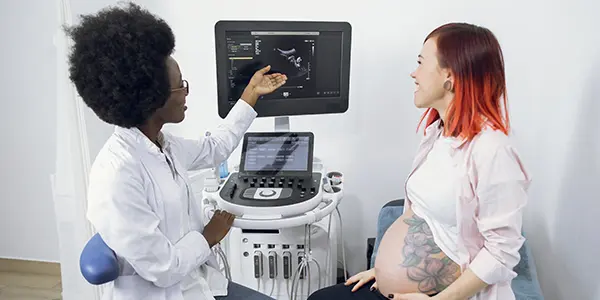
Nuclear medicine technologists administer radioactive drugs to patients and use specialized cameras to create images showing how organs and tissues function. Radiologic technologists use X-ray equipment to create images of bones and internal structures. Both fields involve medical imaging and require working alongside physicians and other healthcare workers, but nuclear medicine focuses on physiological processes while radiology emphasizes anatomical structures. Nuclear medicine technologists work with radioactive materials to treat patients and help diagnose medical conditions.
What careers can I pursue with a Nuclear Medicine Technology degree?
Graduates work as certified nuclear medicine technologists in hospitals, imaging clinics, cancer treatment facilities, cardiac centers, and research institutions where they operate imaging equipment and prepare radioactive drugs. Some specialize in positron emission tomography, cardiac nuclear medicine, or therapeutic procedures to treat medical conditions. With additional training and experience, technologists can advance to lead technologist positions, department supervisors working under a program director, or imaging managers.
Can I transfer credits from another institution?
Yes, Keiser University accepts transfer credits for undergraduate and graduate-level programs. Our admissions team will work with you to review your transcripts and determine your transfer eligibility. Credits transfer based on several factors including accreditation and course equivalency. Learn more about credit transfer requirements and eligibility requirements.
Is financial aid available for this program?
Absolutely. Students in this program may qualify for grants, scholarships, and tuition assistance programs. Military veterans may also qualify for education benefits. Speak with a dedicated financial aid counselor to explore all available options and create a plan that fits your situation. Learn more about Keiser University’s Financial Services.
What certification exams will I be eligible to take?
Keiser University nuclear medicine technology graduates qualify to sit for certification examinations through the American Registry of Radiologic Technologists (ARRT-N) and the Nuclear Medicine Technology Certification Board (NMTCB). Most employers require certification from one or both organizations before hiring nuclear medicine technologists. Passing these exams demonstrates your competency to operate imaging equipment, prepare radioactive drugs, minimize radiation exposure, and provide technical support to physicians. Certification also qualifies you for state licensure where required.
Do nuclear medicine technologists work with radiation?
Yes. Nuclear medicine technologists work with radioactive drugs and radioactive isotopes daily, following strict safety procedures to minimize radiation exposure and prevent unnecessary radiation exposure. The nuclear medicine program teaches ALARA (As Low As Reasonably Achievable) principles and regulatory practices. Proper safety procedures, monitoring badges, and protective equipment keep radiation exposure well within safe limits for healthcare workers.
How long does it take to complete the nuclear medicine technology program?
The associate degree program takes approximately 24 months to complete when attending full-time. The exact completion time varies based on your course load, any transfer credits, and your individual academic progress.
What are the clinical rotation requirements?
Students complete six clinical rotations totaling 18 credit hours at affiliated healthcare facilities including hospitals and imaging clinics. Clinical rotations provide supervised hands-on experience performing nuclear medicine procedures with real patients. Students learn to operate imaging equipment, prepare radioactive drugs, explain medical procedures to patients, turn patients for optimal positioning, maintain detailed records, and provide technical support to physicians and other healthcare workers.
This Program is Available at the Following Campuses


Related Programs




























Connect with a Counselor
Connect with a Counselor


