We Apologize
The page you were looking for appears to have been moved or replaced. You can visit one of the links below, perform a search on the search bar at the top right of the page or go back to the home page by clicking on the button below.
The page you were looking for appears to have been moved or replaced. You can visit one of the links below, perform a search on the search bar at the top right of the page or go back to the home page by clicking on the button below.
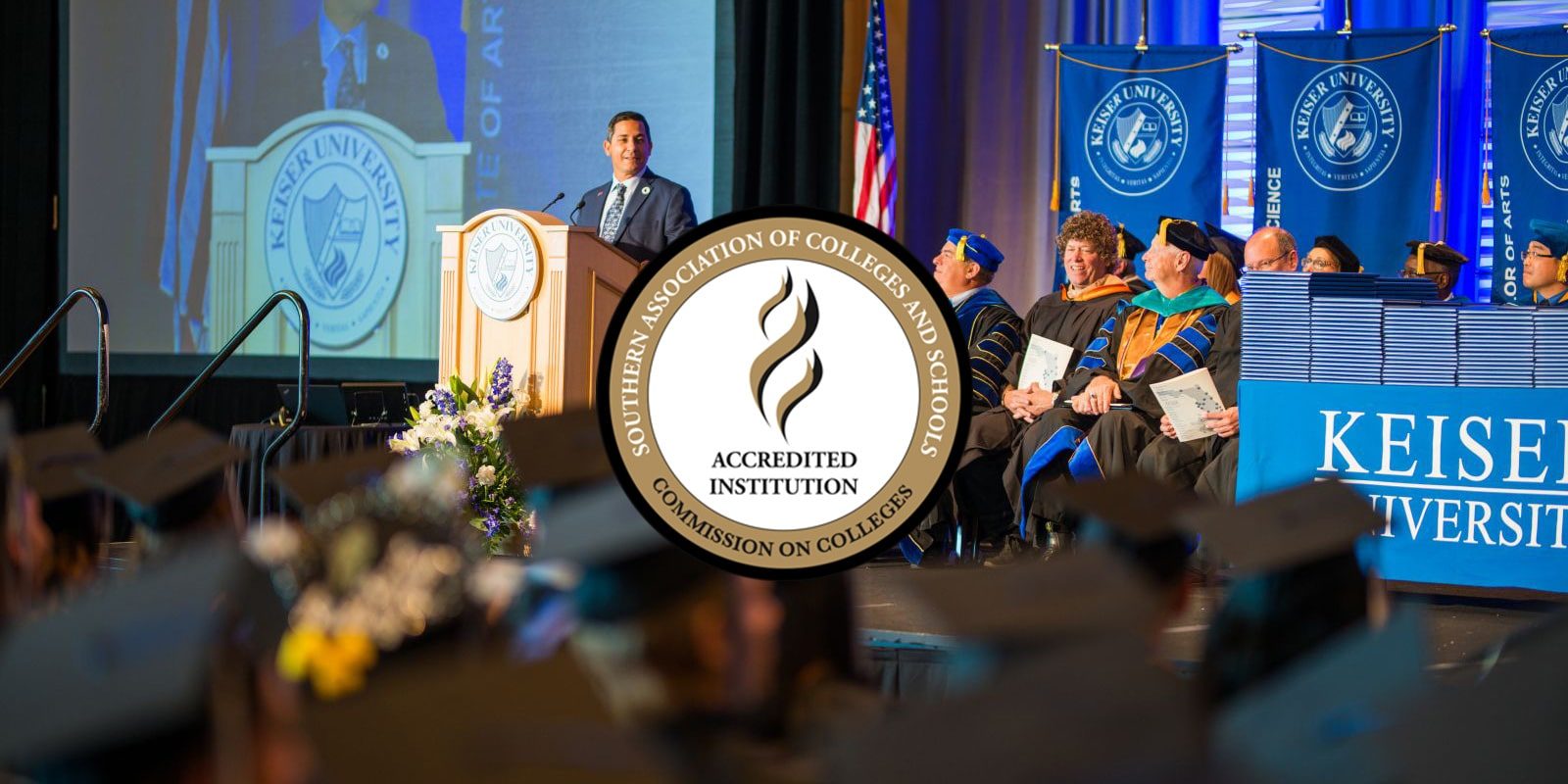 Keiser University is accredited by the Southern Association of Colleges and Schools Commission on Colleges to award certificates and degrees at the associate, baccalaureate, masters, specialist, and doctoral levels. Questions about the accreditation of Keiser University may be directed in writing to the Southern Association of Colleges and Schools Commission on Colleges at 1866 Southern Lane, Decatur, Georgia 30033-4097 by calling (404) 679-4500, or by using information available on SACSCOC’s website (www.sacscoc.org). Please note: Normal inquiries about Keiser University, such as admission requirements, financial aid, educational programs, etc., should be addressed directly to Keiser University and not to the Commission’s office. The Commission should be contacted only if there is evidence that appears to support an institution’s significant non-compliance with a requirement or standard.